
Zucchini Pinsa

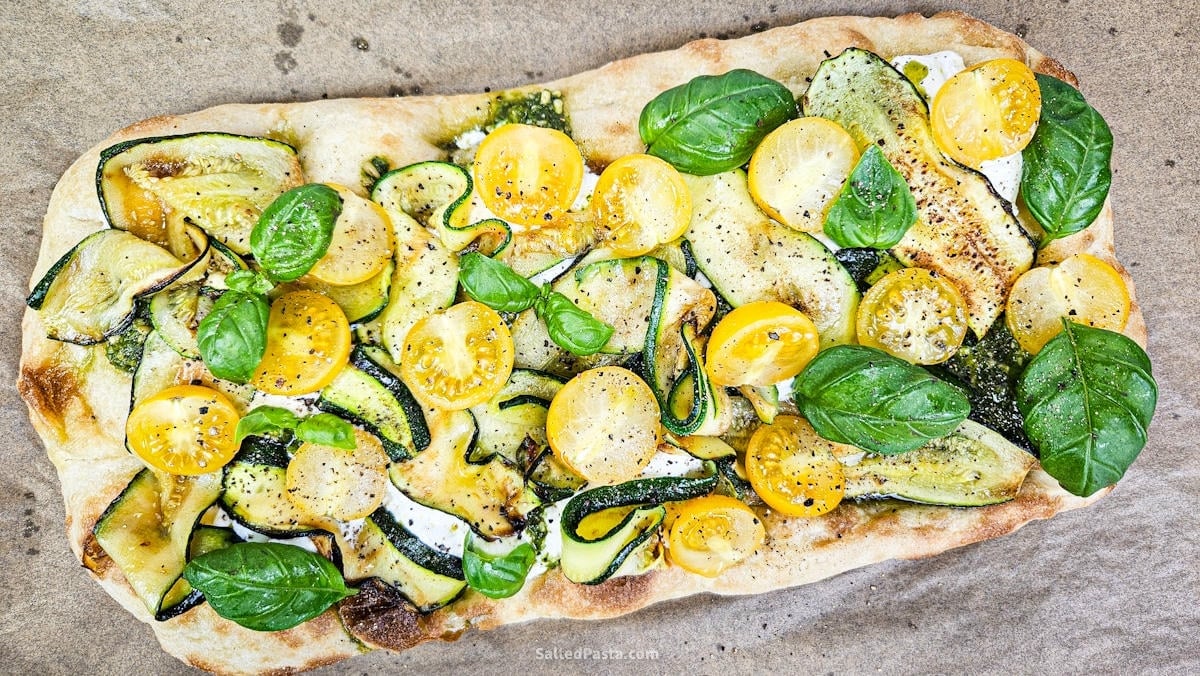
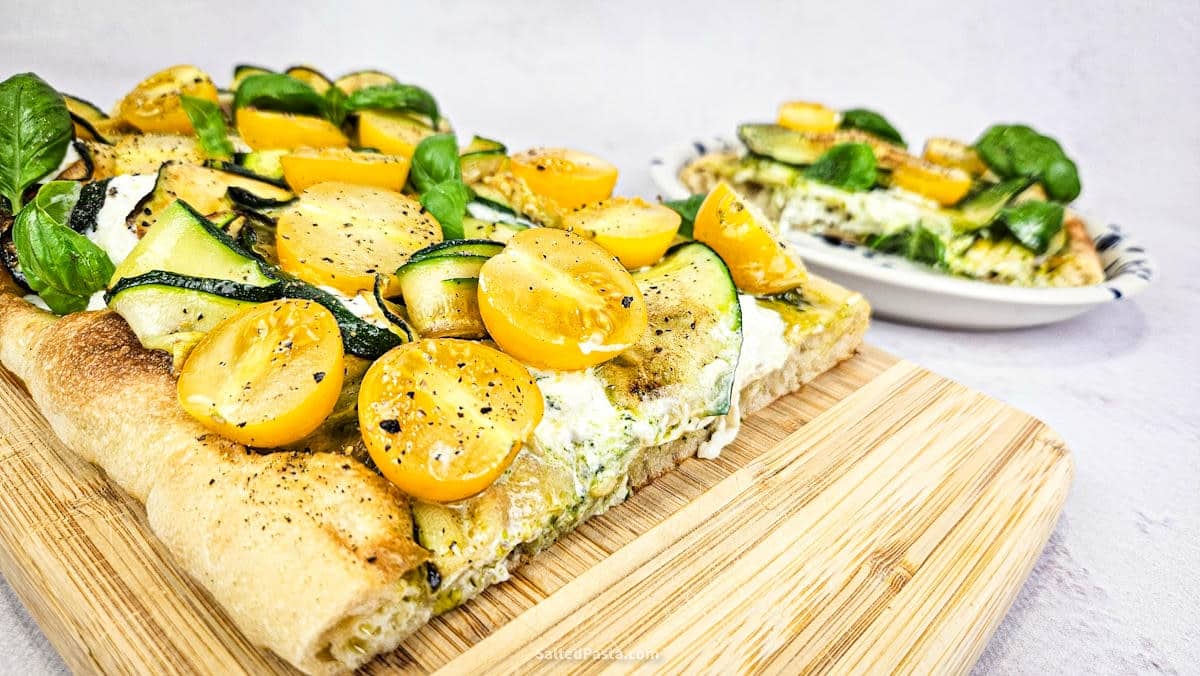
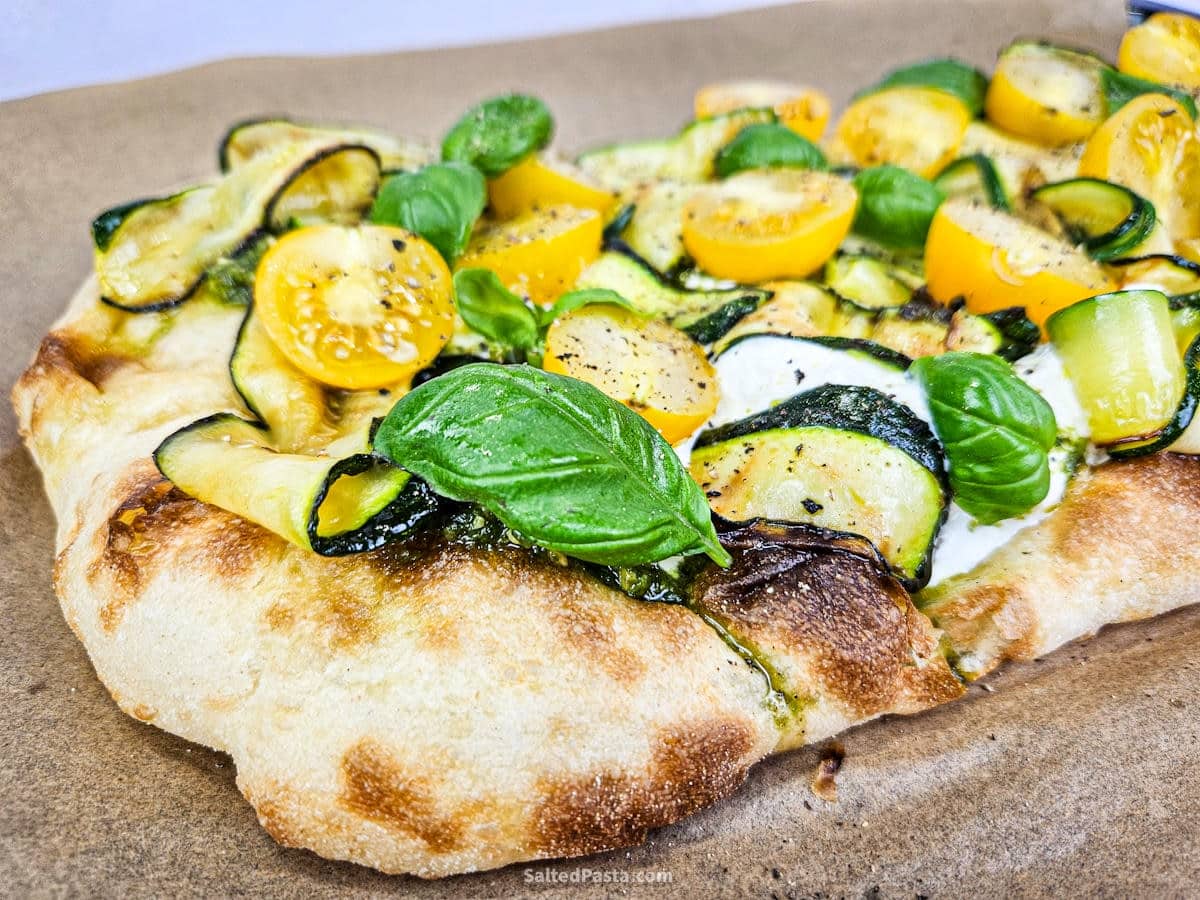
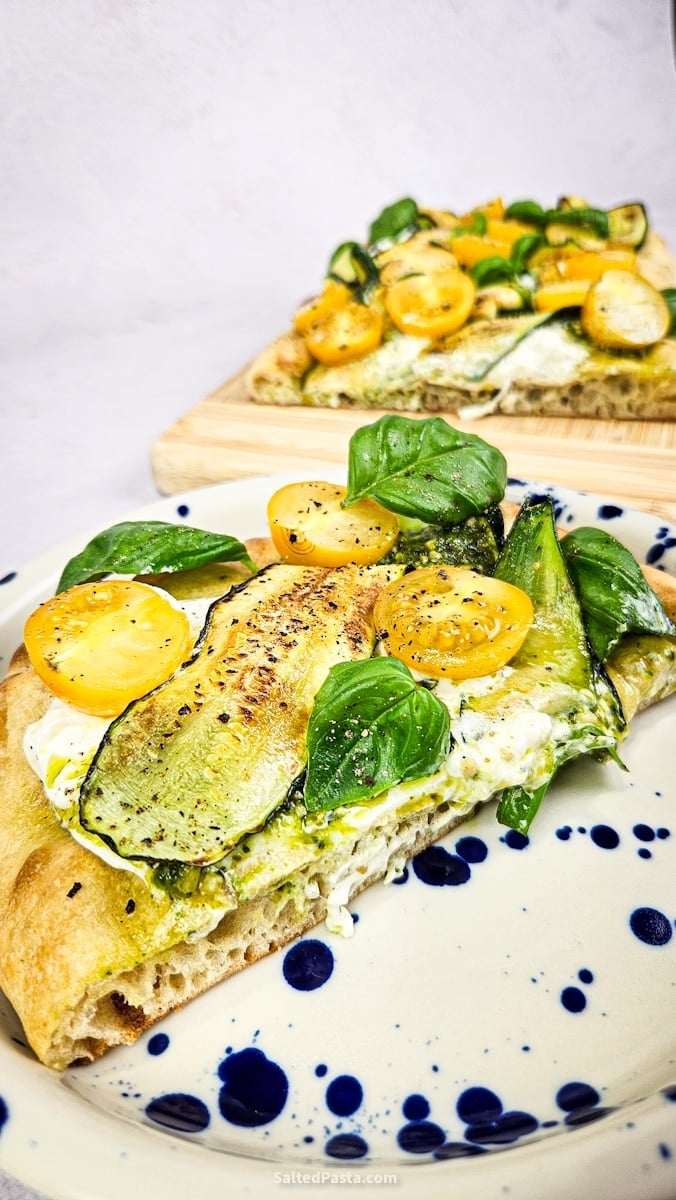
This zucchini, burrata and basil pesto pinsa is a vegetarian recipe, and each slice contains as much as 10 g of protein! It’s incredibly easy to make because the only thing you need to prepare from scratch is the fried zucchini. It’s a great idea for a quick lunch, dinner or snack, especially when unexpected guests show up at your door.
Recipe modifications:
- Protein: Instead of burrata, you can use ricotta or another creamy cheese. You can also sprinkle some Parmesan over the pinsa for an extra boost of flavor. If you’re not looking for a vegetarian snack — or simply can’t imagine a meal without meat — feel free to add some prosciutto or pieces of pan-fried chicken.
- Vegetables: Instead of zucchini, you can use eggplant or make a tomato pinsa. It’s especially delicious in summer, when tomatoes finally taste the way they should! Try slicing a few different varieties of tomatoes and arrange them on the pinsa to create something similar to bruschetta, with pesto and burrata. Simple, fresh and absolutely delicious.
Do you need to salt zucchini before sautéing?
Yes and no. You don’t have to, but if you salt the zucchini and let it release some of its excess water, you’ll notice a huge difference in the final result.
It’s the same trick that helps remove bitterness from eggplant, but with zucchini it brings out its natural sweetness. Once sautéed, the zucchini becomes surprisingly sweet, even though you haven’t added a single gram of sugar.
All it takes is an extra 10 minutes, and the result is WOW!
I recommend making more of this sautéed zucchini than you think you’ll need — it might disappear before it even makes it onto the pinsa.
Before slicing, simply wash the zucchini thoroughly. There’s no need to peel it. Small, young zucchini are the best choice for this recipe. Large, firm zucchini are better suited for dishes like zucchini stew than for eating simply sautéed.
How long should you bake pinsa?
Pinsa only needs about 5–7 minutes in the oven.
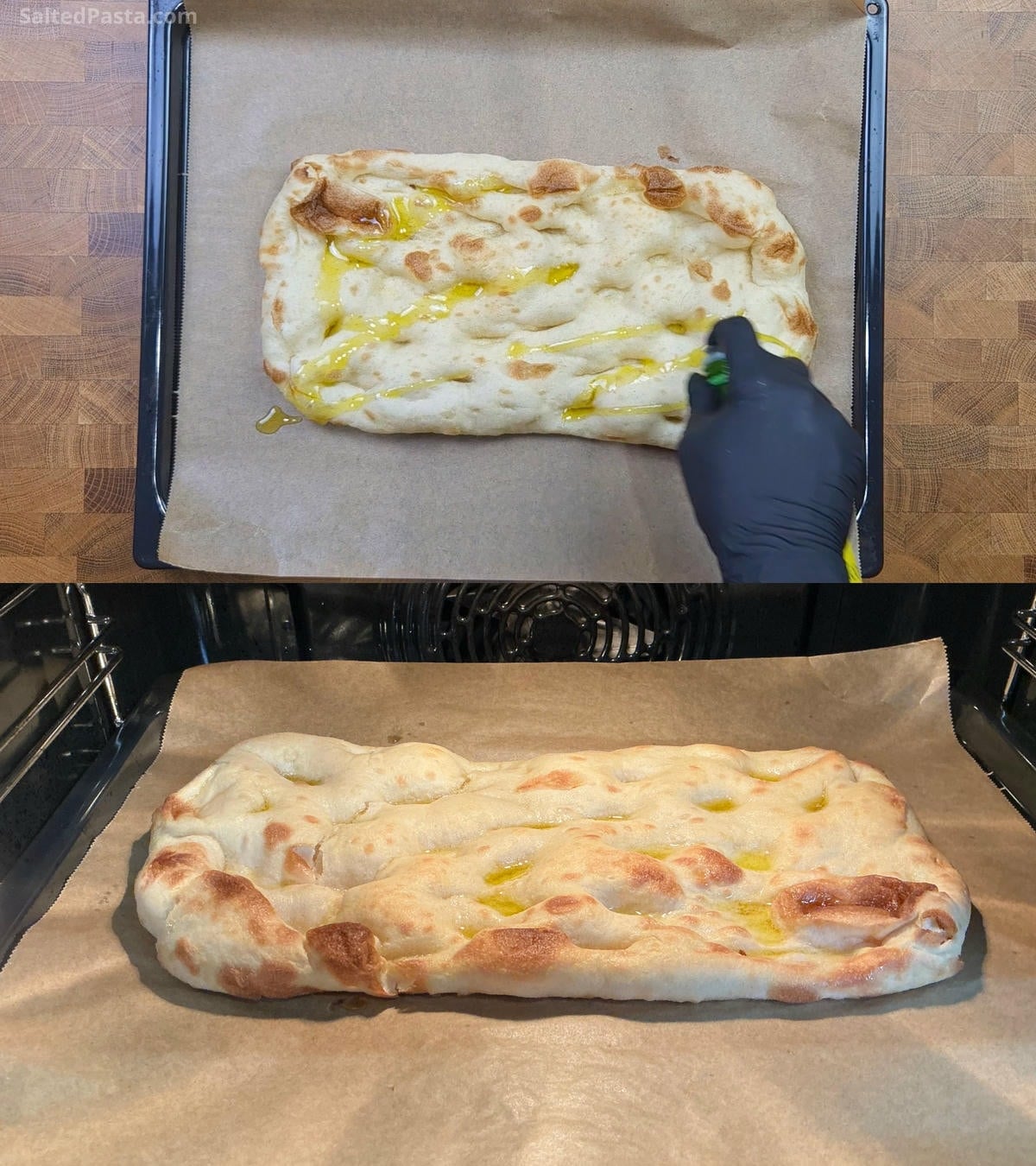
I always bake mine at 200°C / 390°F, using conventional top and bottom heat rather than a fan setting. Before baking, I like to lightly brush the pinsa with olive oil. This gives it an extra crispy, almost lightly fried crust. It’s completely optional, though — especially if you’re watching your calorie intake.
What’s the difference between pinsa and pizza, and which one is better?
Pinsa is usually oval or rectangular in shape and is traditionally made from a blend of three types of flour: rice, wheat and soy flour. It also typically has a higher hydration level — meaning a higher ratio of water to flour in the dough — and undergoes a longer fermentation process.
That’s why pinsa is often considered a healthier and more easily digestible cousin of pizza.
However, it really depends on the product. Just like with pizza, not all pinsa is created equal.
Finding a store-bought pinsa that isn’t made entirely from wheat flour can be almost impossible, and manufacturers rarely provide information about how long the dough has been fermented. So it’s difficult to call most of the pinsa available in supermarkets truly traditional or authentic.
If you’re looking for a healthier alternative to regular pizza dough, I recommend trying whole-wheat pinsa. It will certainly contain more fiber than pinsa made with regular refined wheat flour.
When checking the ingredients, it’s also worth paying attention to preservatives. If possible, choose pinsa without potassium sorbate or other unnecessary additives.
Unfortunately, doing this may require visiting a few different supermarkets and carefully comparing ingredient lists. Still, it’s worth making conscious choices — especially if pinsa is something you prepare regularly for yourself and your children.
How many servings does this recipe make?
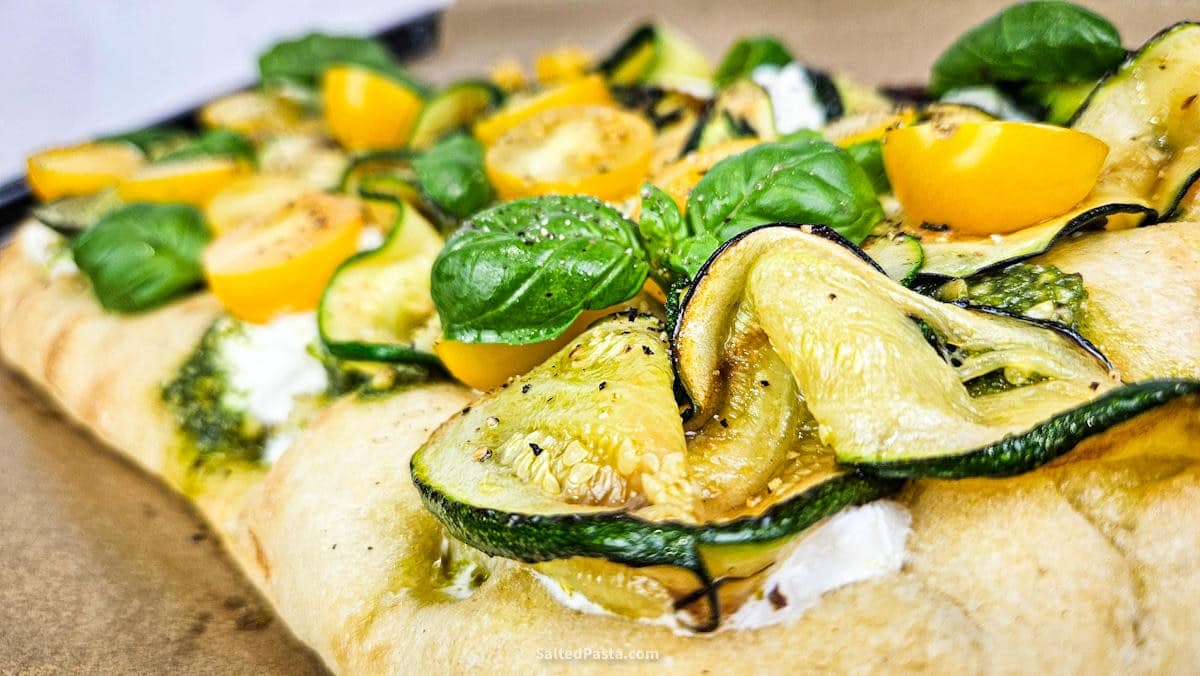
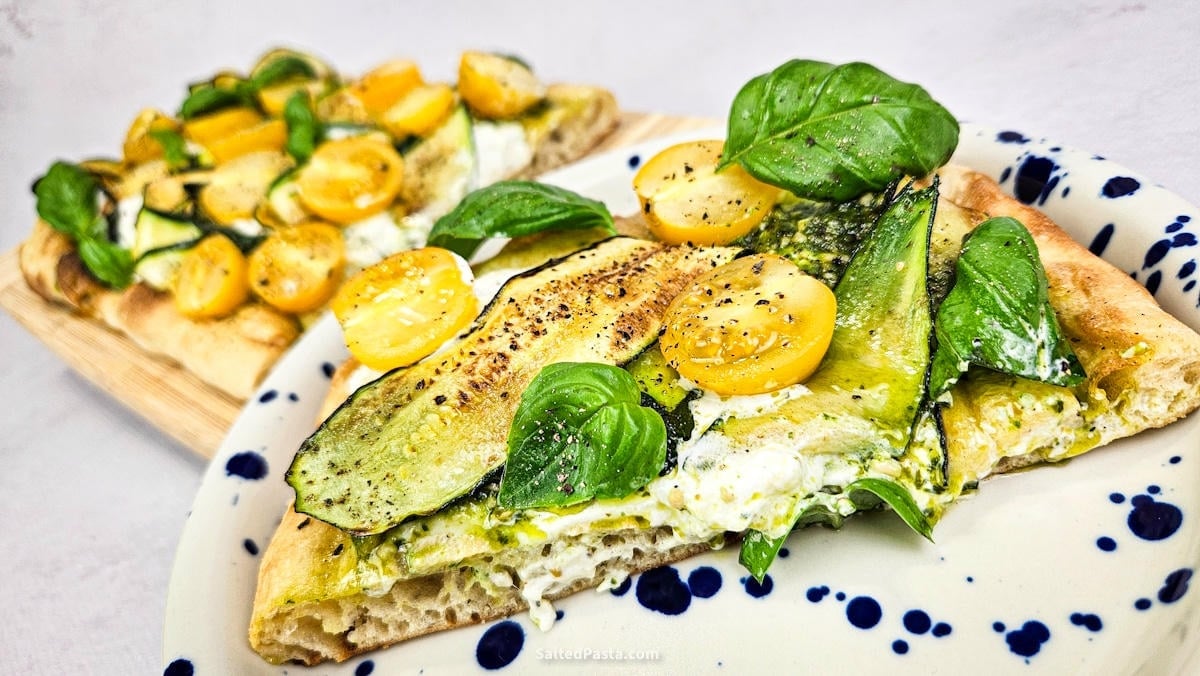
The quantities listed below make 1 pinsa, which can be cut into approximately 6 slices of 95 g each.
Follow the step-by-step recipe to learn how to make the best zucchini pinsa, and watch the video below the recipe for extra guidance.
Subscribe to the SaltedPasta YouTube channel and sign up for the newsletter so you never miss a new recipe!
Zucchini Pinsa
Video
Zucchini Pinsa with Pesto and Burrata Recipe
Ingredients
- 250 g pinsa (1 piece)
- 150 g zucchini (1 small)
- 125 g cherry tomatoes
- 200 g burrata (1 piece)
- 45 g pesto
- 3 tbsp olive oil
- 1 handful basil leaves
- salt
- black pepper
Instructions
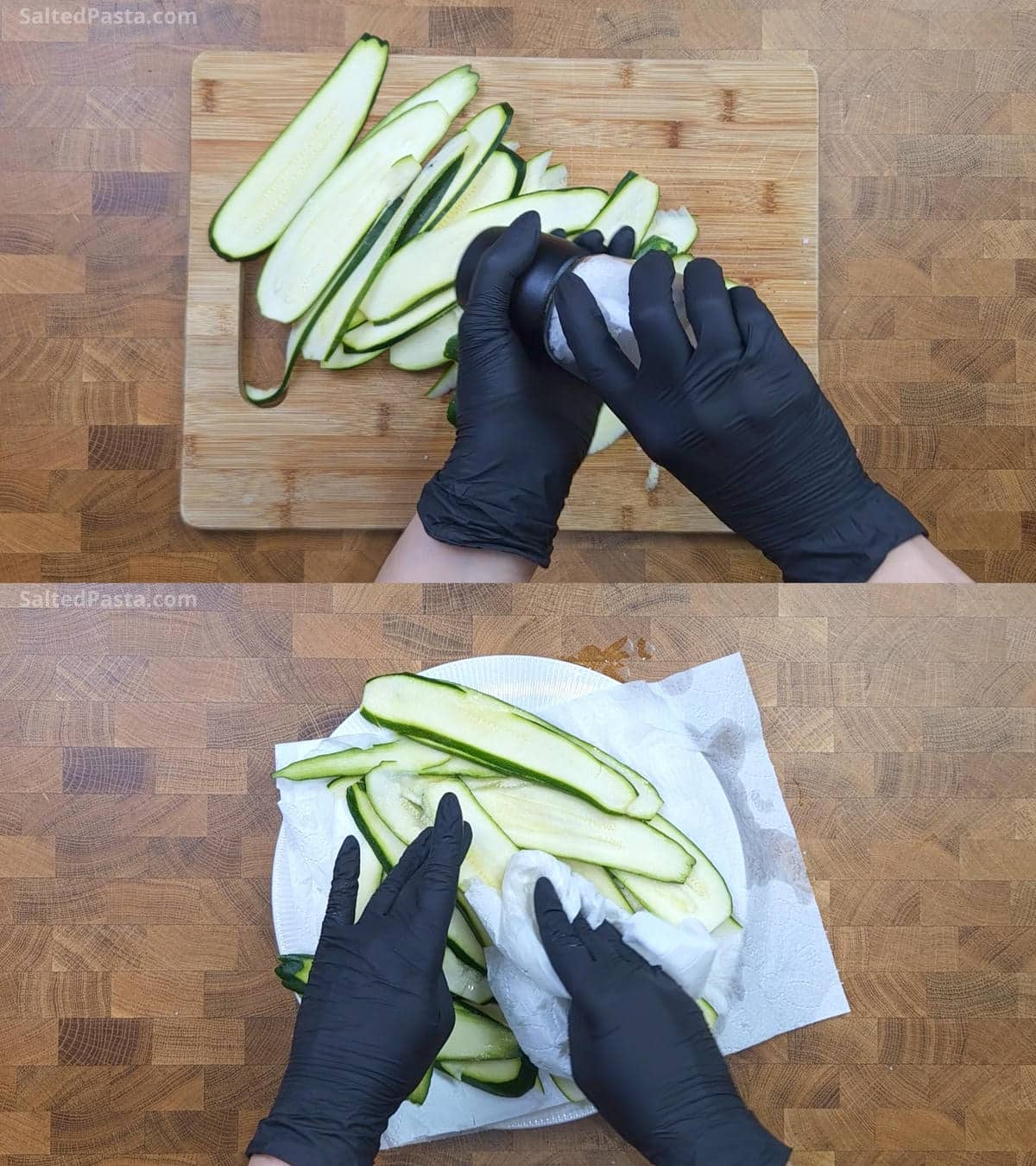
- Slice the zucchini into thin rounds or long ribbons. Season both sides generously with salt and set aside for about 10 minutes. Once droplets of moisture appear on the surface, rinse off the excess salt and pat the zucchini completely dry with paper towels.150 g zucchini, salt

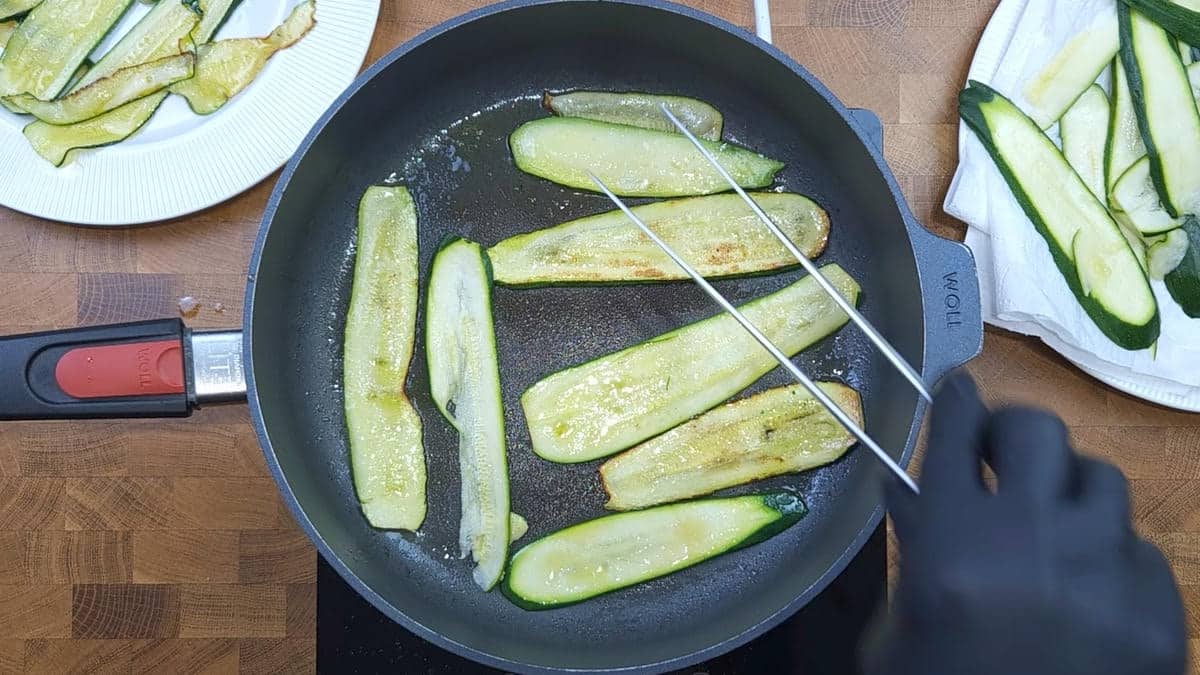
- Heat a little olive oil in a skillet over medium-high heat and fry the zucchini slices until golden on both sides.

- Drizzle the pinsa with a little olive oil. Bake in a preheated oven at 200℃ (392 °F) for about 5 minutes, until lightly crisp.250 g pinsa, 2 tbsp olive oil
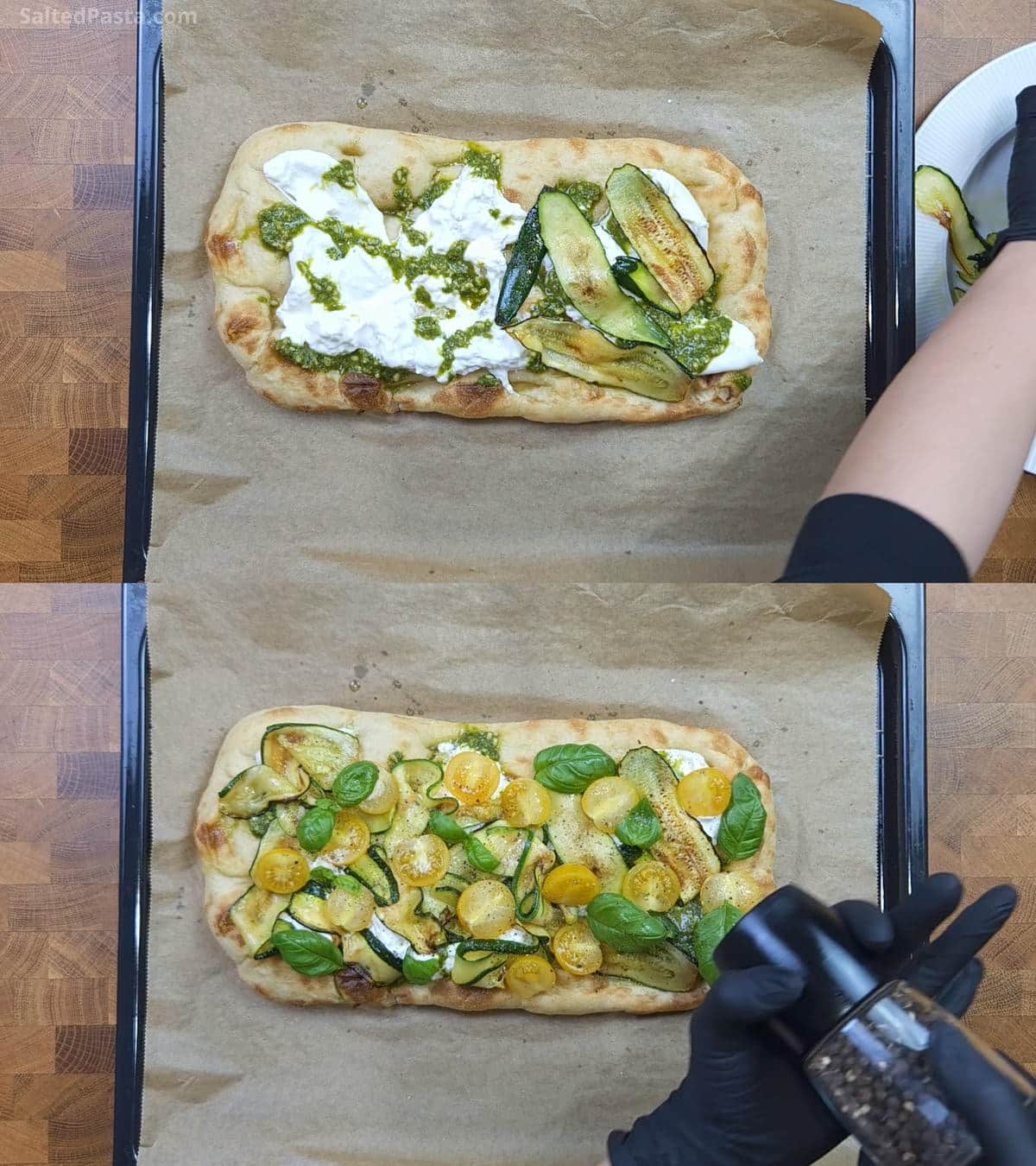
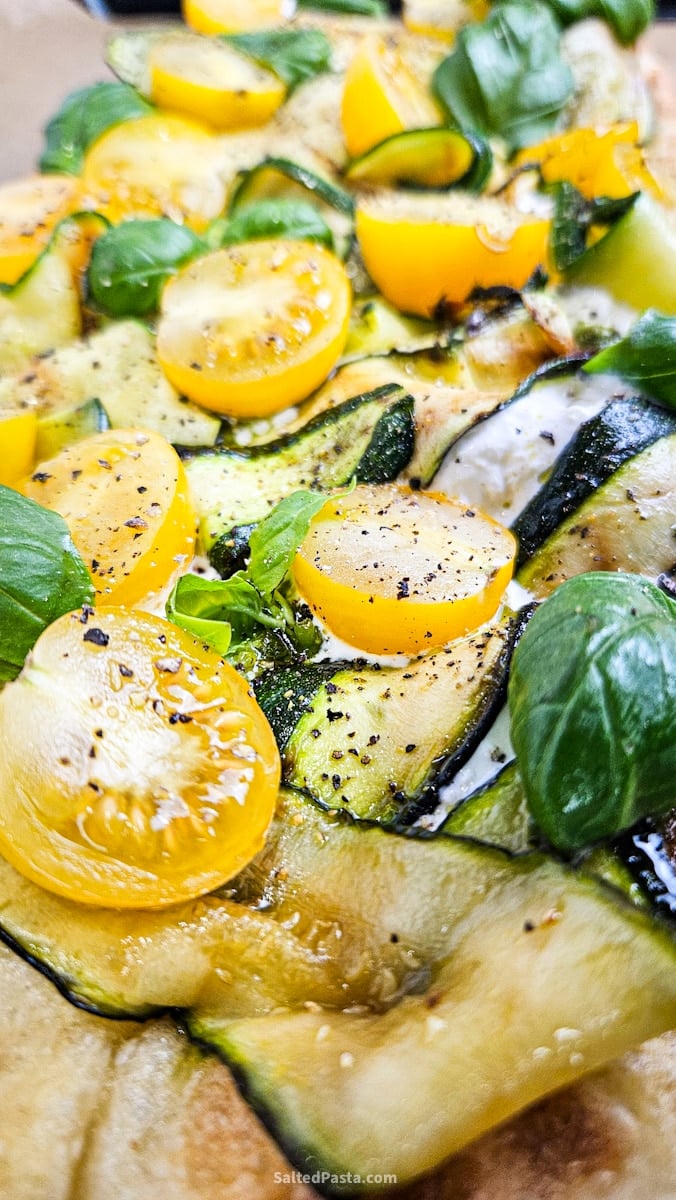
- Spread the basil pesto over the pinsa, then top with the burrata, fried zucchini, and halved cherry tomatoes. Finish with freshly ground black pepper and a drizzle of extra virgin olive oil. Garnish with a few fresh basil leaves, if desired. Enjoy!125 g cherry tomatoes, 200 g burrata, 45 g pesto, 1 tbsp olive oil, black pepper, 1 handful basil leaves
Nutrition
Percent Daily Values are based on a 2,000 calorie diet
You are here: