
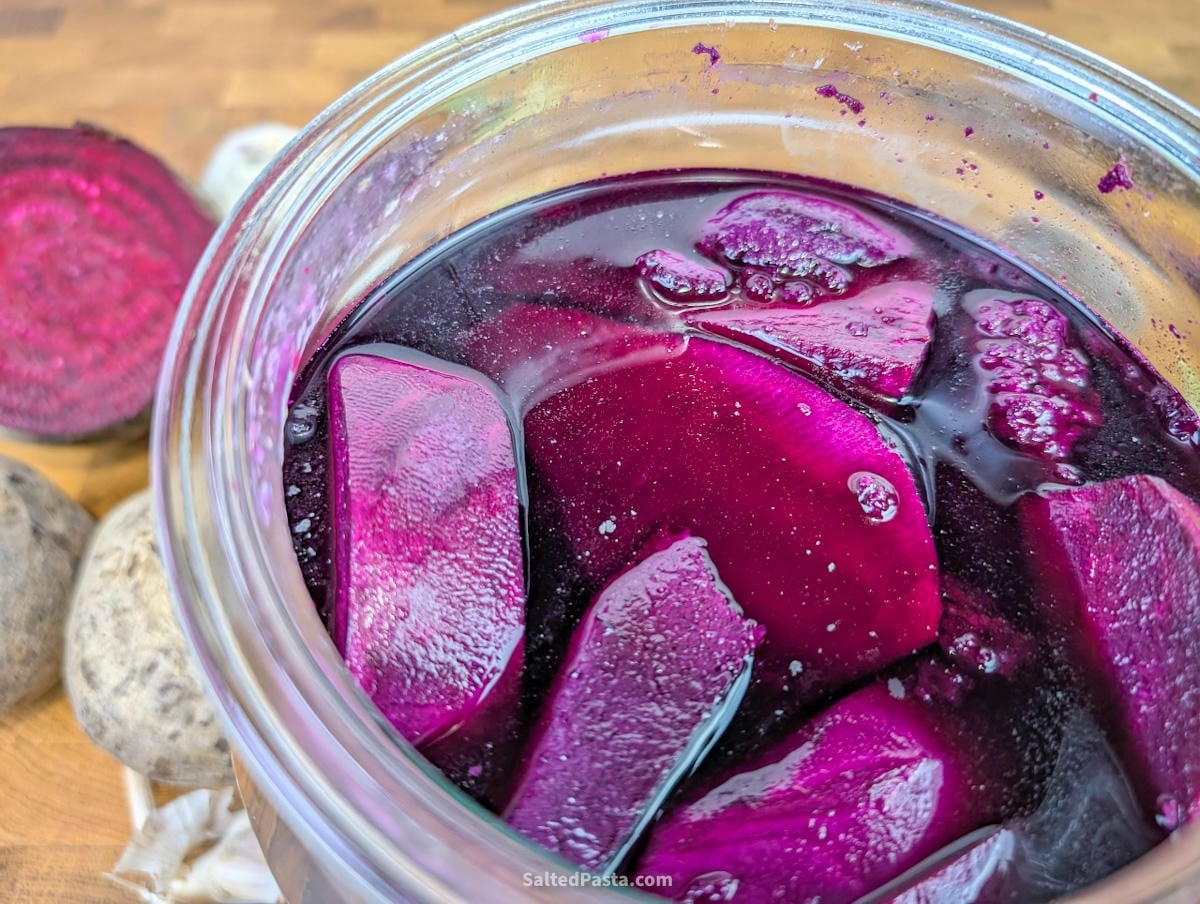
Beet Kvass (Pickled Beetroot Juice)

Homemade beet kvass (Polish zakwas buraczany) is a true health powerhouse. You can drink it as a vitamin shot to boost immunity and increase energy levels. It’s perfect for enhancing homemade borscht, supporting gut health, and it also works wonderfully as a marinade for meat, which becomes tender thanks to the natural acids created during fermentation.
Recipe Modifications:
- Proportions: The amounts of water and beets are approximate. Adjust them according to the size of the container you’re using. As a general rule, fill about ⅔ of the container with beets and then pour in enough water to fully cover them so that nothing sticks out above the surface.
- Container: It’s best to use a fairly wide container so you can weigh the beets and spices down with a small bowl or plate. Do not prepare beet kvass in plastic or metal containers, as theese materials may react with the acid.
- Spices: You can add extra flavor to your beet kvass, for example horseradish root or whole peppercorns.


What Is Beet Kvass?
Beet kvass is simply the liquid from fermenting beets—just like the brine from fermented cucumbers or sauerkraut. Fermented beet juice is just as healthy to drink as other fermented vegetables and is equally great for cooking.
How to Make Beet Kvass for Drinking?
Beet kvass is very easy to prepare. Just place all the ingredients in a jar, cover them with water, loosely cover the jar, and patiently wait for the beets to start fermenting. It’s during the fermentation process that beneficial bacteria are formed.
Do Beets Need to Be Peeled for Kvass?
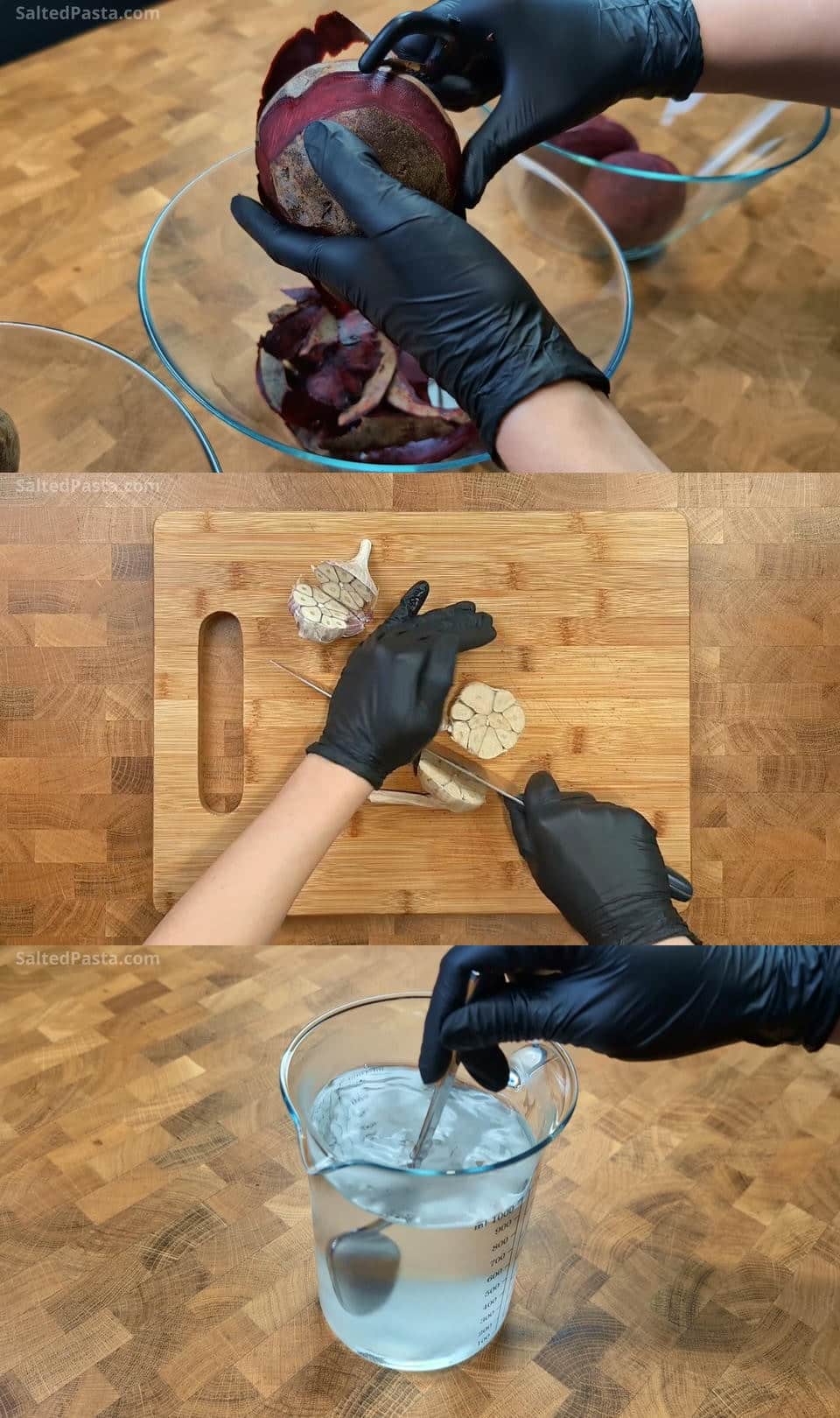
Beets do not need to be peeled to make kvass. Simply wash them thoroughly. If you prefer not to peel them, just scrub them well with a wire dish brush. Personally, I find using a vegetable peeler faster than scrubbing.
Is Beet Kvass Added to Borscht?
Homemade fermented beet juice is a fantastic addition to borscht. There’s no need to use store-bought kvass, which often has little to do with true fermentation and is usually just beet juice acidified with citric acid or vinegar. Borscht made with homemade beet kvass is much healthier and far more flavorful.
What Are the Benefits of Drinking Beet Kvass?
Beet kvass is not only delicious but also very healthy – especially when consumed as a drink. It provides plenty of vitamins and minerals, helps cleanse the body, improves digestion, boosts immunity, and helps regulate blood pressure and blood sugar levels. It’s also recommended for people dealing with anemia.
Beet kvass is rich in lactic acid bacteria, which are essential for good health. They strengthen the immune system, support digestion, and help maintain a balanced gut microbiome. For this reason, beet kvass is a natural probiotic.
The proportions below yield approximately 2.5 liters of beet kvass.
Read the step-by-step recipe on how to make beet kvass for borscht and watch the video below the recipe.
Be sure to subscribe to the SaltedPasta YouTube channel and sign up for the newsletter so you don’t miss any new recipes!
Beet Kvass (Pickled Beetroot Juice)
Video
Homemade Beet Kvass
Ingredients
- 3 kg beets
- 2 heads garlic
- 2,5 l boiled and cooled water
- 2,5 tbsp salt
- 1 handful allspice grains
- 5-10 leaves bay leaves
- 1 handful black pepper grains
- 1 slice rye sourdough bread (optional)
Instructions
- Wash and scrub or peel the beets thoroughly. Cut them into large pieces. Cut in half the garlic heads. Dissolve salt in the water: 1 tablespoon of salt per 1 liter of water.3 kg beets, 2 heads garlic, 2,5 l boiled and cooled water, 2,5 tbsp salt

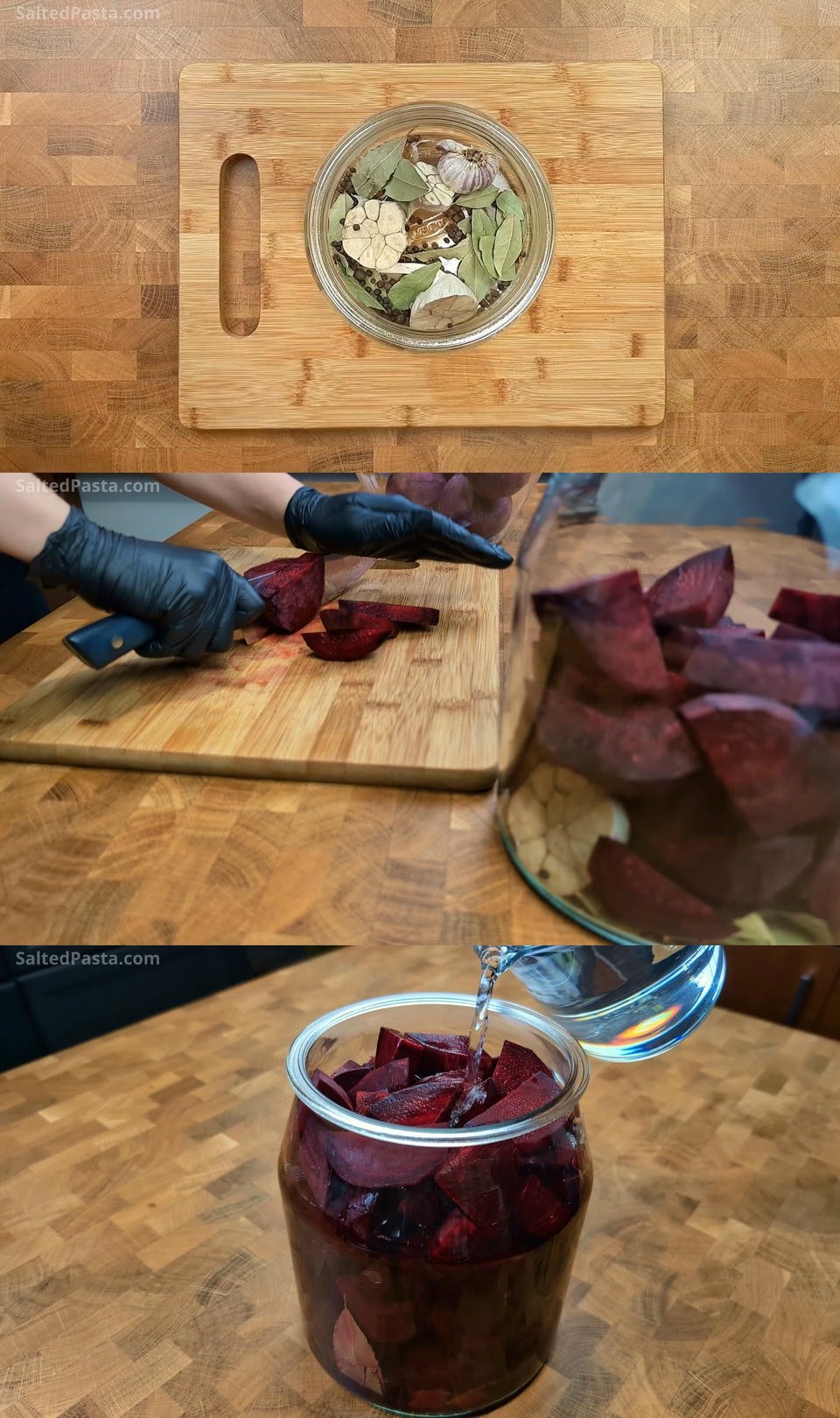
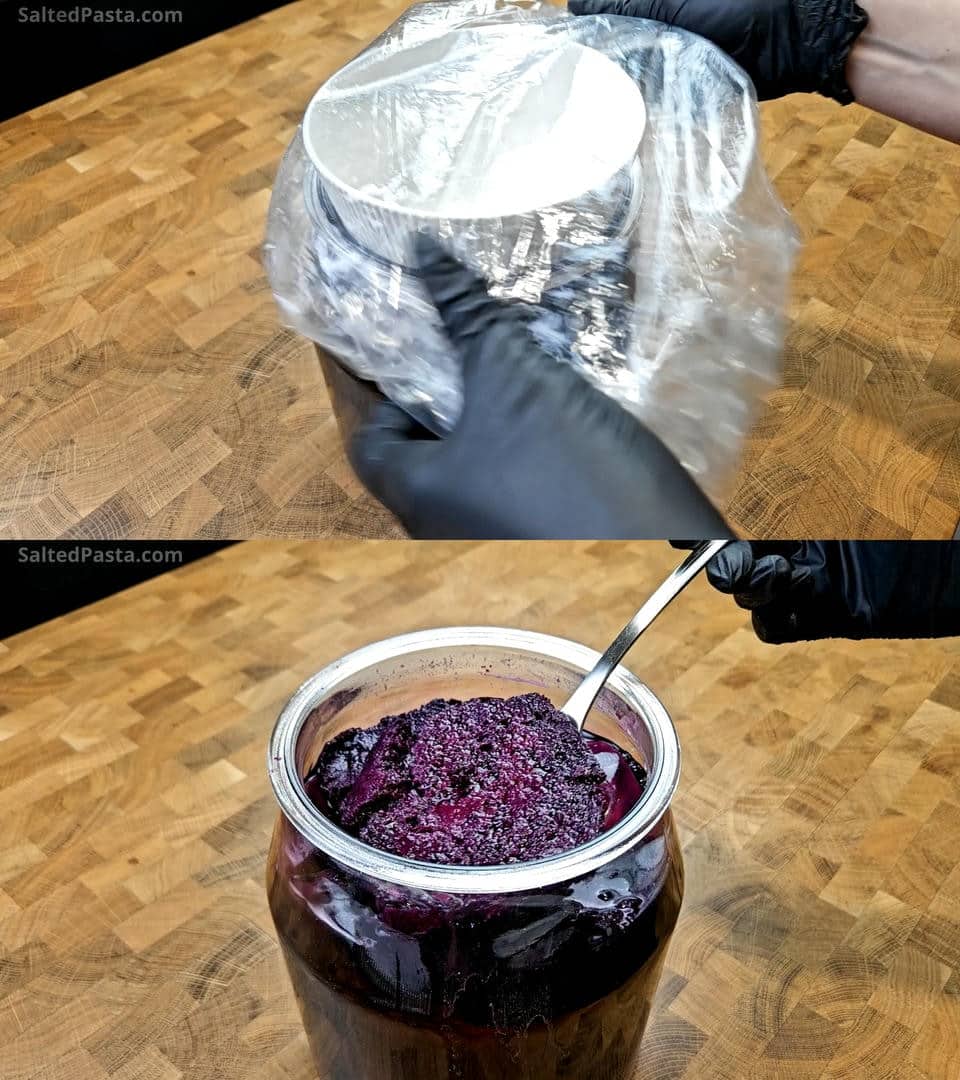
- First, add the spices and garlic to a large clay or glass jar (they are the lightest and may float). Then add the beets (they should take up about ⅔ of the jar) and pour in enough water to completely cover the beets and extend a few centimeters above the surface. Optionally, you can also add a slice of rye bread to speed up fermentation. If possible, weigh down the bread and beets, for example, with a plate, to ensure nothing floats to the surface. You can cover the jar with a towel or cheesecloth. Do not close the jar tightly, as gas is produced during fermentation and could burst the jar.1 handful allspice grains, 5-10 leaves bay leaves, 1 handful black pepper grains
- Check the condition of your starter daily, making sure no ingredients have floated to the surface – the starter could become moldy. After 2-3 days, you can remove the slice of bread or replace it with a new one. The presence of bacteria in the sourdough bread will accelerate fermentation. Depending on how sour you want your starter, you can store it for 7 days to several weeks. When the starter is ready, strain it and pour it into sterilized and cooled jars and seal. You can store this starter in the refrigerator for up to several months.1 slice rye sourdough bread

Nutrition
Percent Daily Values are based on a 2,000 calorie diet
You are here: