
Greek salad

Greek salad is probably one of the most famous salads in the world, so it simply had to have a place on the blog. It’s incredibly simple, wonderfully minimalist, and yet everyone seems to have their own version. Horiatiki, the traditional Greek village salad, is the perfect side dish for a barbecue or a family dinner. It’s also delicious served in pita bread with chicken gyros or souvlaki, the classic Greek meat skewers. Alongside dakos salad, it’s my favorite salad made with feta cheese.
What goes into a Greek salad?
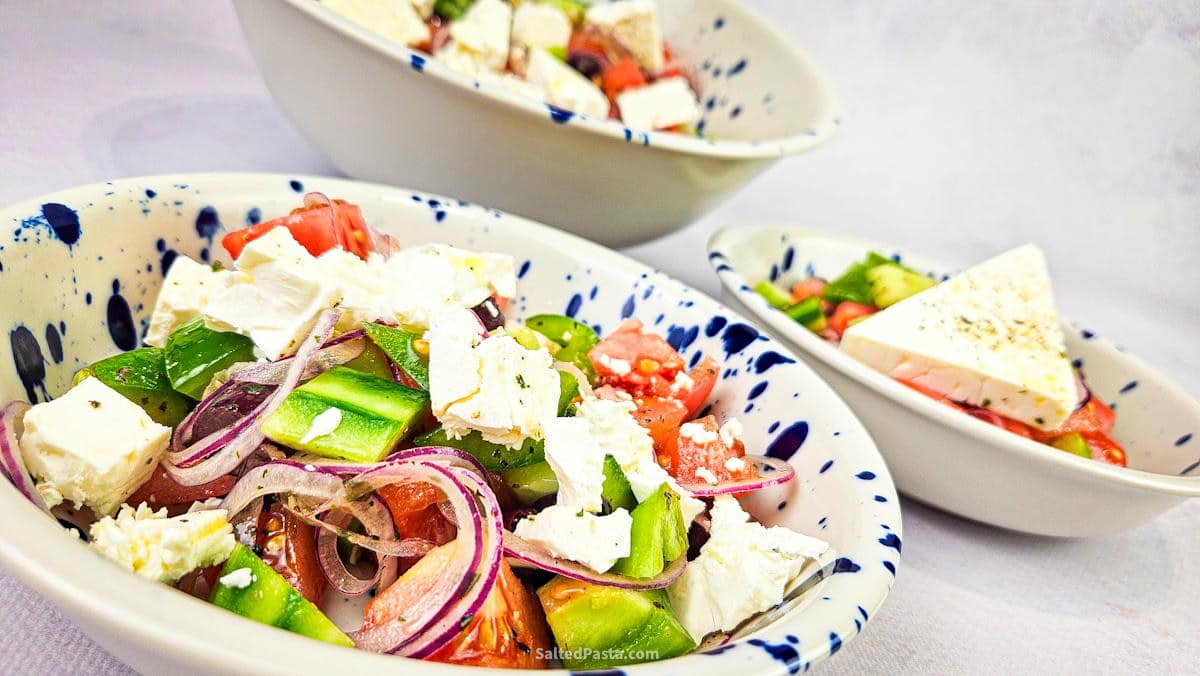
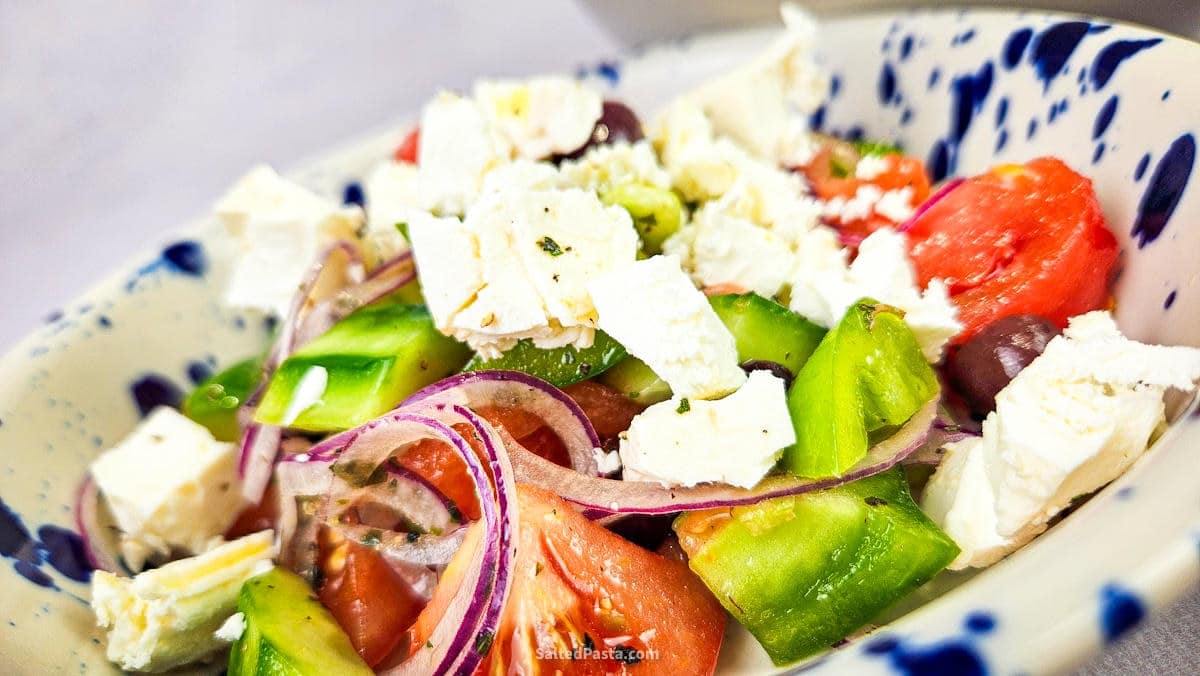
Greek salad is one of the easiest dishes you can make. Simply chop all the vegetables, add the feta cheese, and you’re done. A traditional Greek salad contains cucumber, tomatoes, green bell pepper, Kalamata olives, red onion, and feta cheese.
What is the authentic dressing for Greek salad?
The answer is none. Traditional Greek salad is not served with vinaigrette or any creamy dressing. It’s simply seasoned with extra virgin olive oil, red wine vinegar, and oregano. That’s all it needs.
What seasonings are best for Greek salad?
I like my Greek salad with plenty of freshly ground black pepper and oregano. I never add salt because the feta cheese and olives are already salty enough for me. Fresh oregano is the best choice if you can find it, but freeze-dried oregano is an excellent alternative and has a much fresher flavor than regular dried oregano. I highly recommend trying it if you can find it. In general, freeze-dried herbs work wonderfully in fresh dishes, while I usually use dried herbs in cooked dishes.
Which olives should you use for Greek salad?
Kalamata olives are the best choice. They’re larger, softer, and have a deep purple color, unlike more common black or green olives. They’re usually a bit more expensive, but they’re well worth it for their rich flavor and meaty texture.
Which cheese is best for Greek salad?
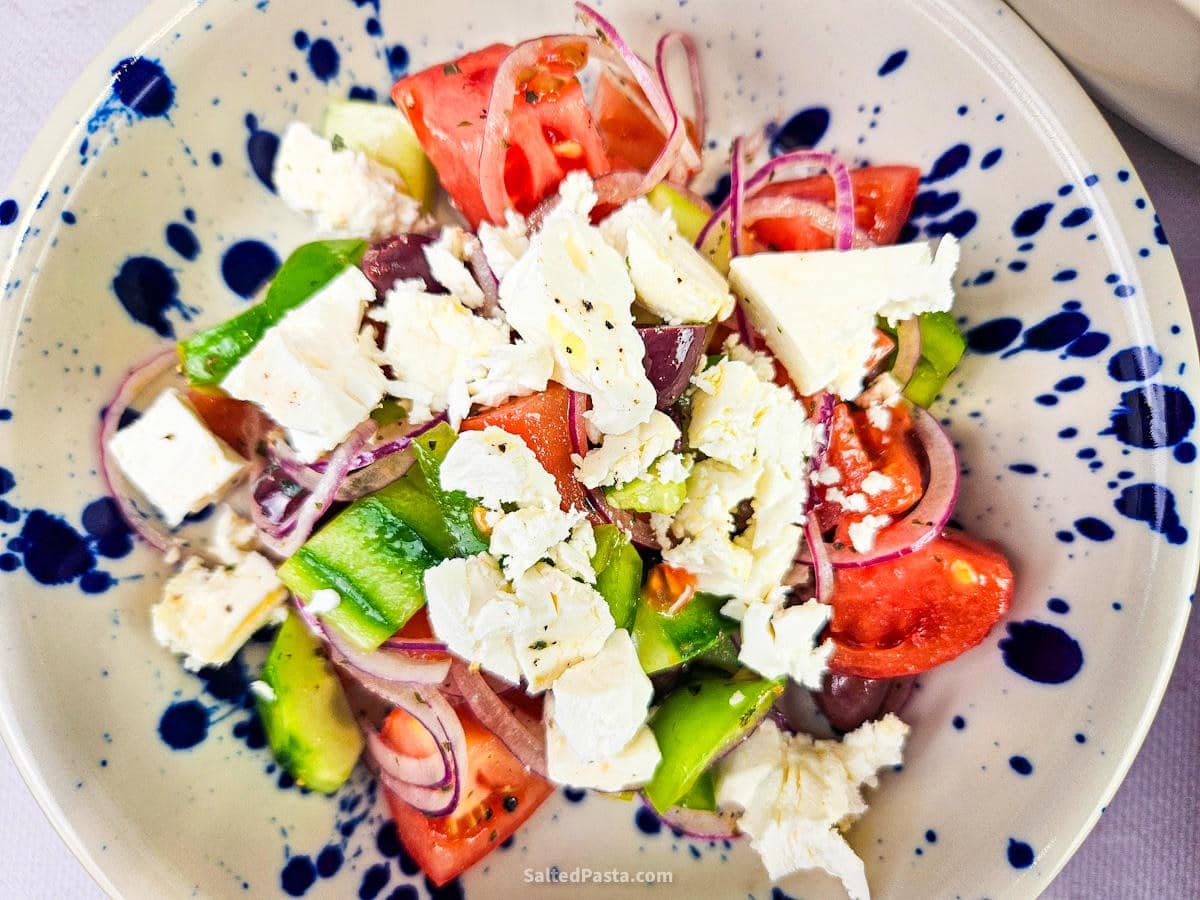
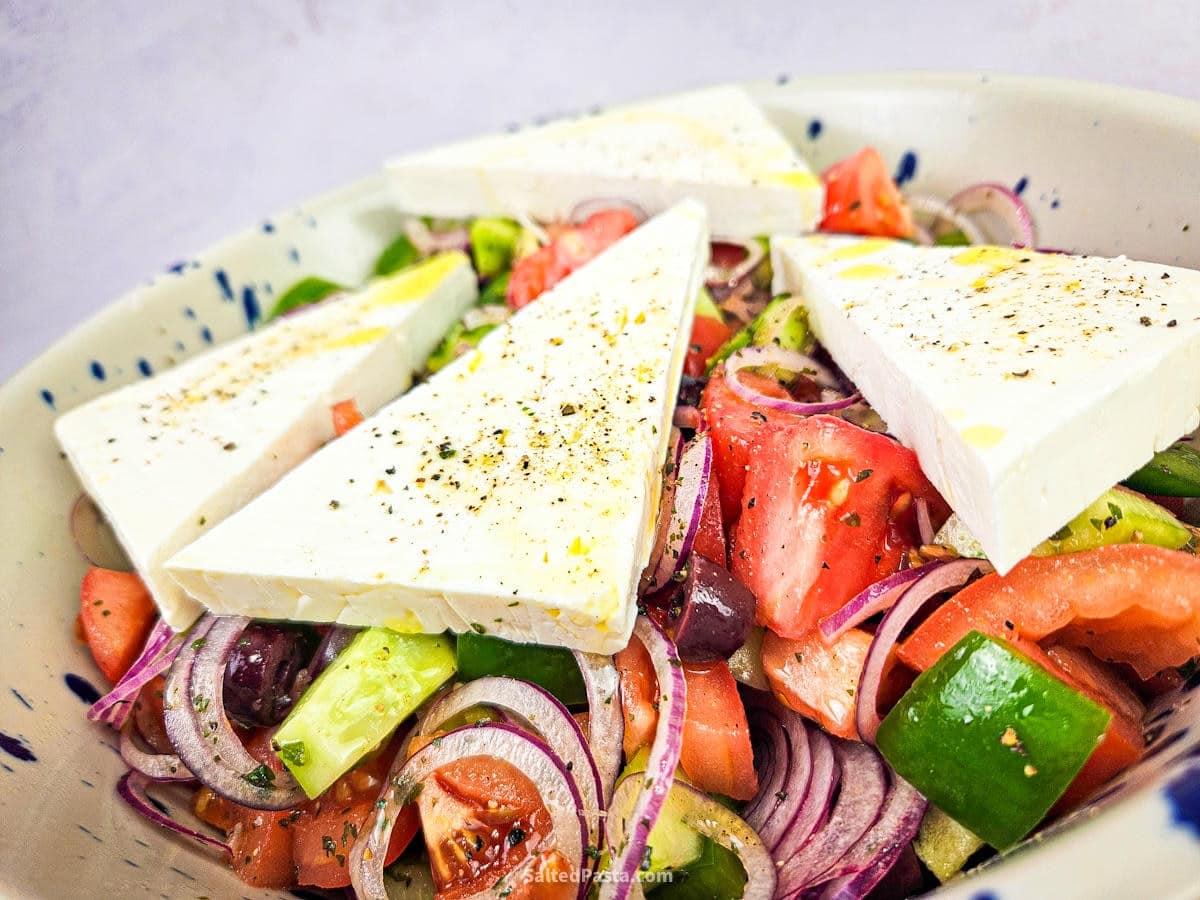
I always use authentic feta cheese. I never substitute it with salad cheese or feta-style cheese. Real feta is firmer, slightly crumbly, and easy to break apart with a fork. It also has its characteristic tiny holes and rich, tangy flavor. If you’ve never tried authentic feta before, you definitely should — it makes a huge difference.
What should you never add to Greek salad?
- Lettuce: Even though many people associate salads with leafy greens, authentic Greek salad never contains lettuce. If you’ve been served one with lettuce in a restaurant, that doesn’t make it traditional. Of course, cooking isn’t an exact science, and everyone is free to create their own version. If you enjoy Greek salad with lettuce, there’s absolutely nothing wrong with that—it just isn’t the classic recipe.
- Cheese: If you want authentic Greek salad, use authentic feta cheese. Don’t replace it with salad cheese or feta-style alternatives.
- Sweetcorn: This one hardly needs an explanation.
- Extra seasonings and sauces: Greek salad is all about simplicity—keep it simple. Skip the mayonnaise, mustard, heavy dressings, and unnecessary spices. Freshly ground black pepper, oregano, extra virgin olive oil, and optionally a splash of red wine vinegar are all you need.
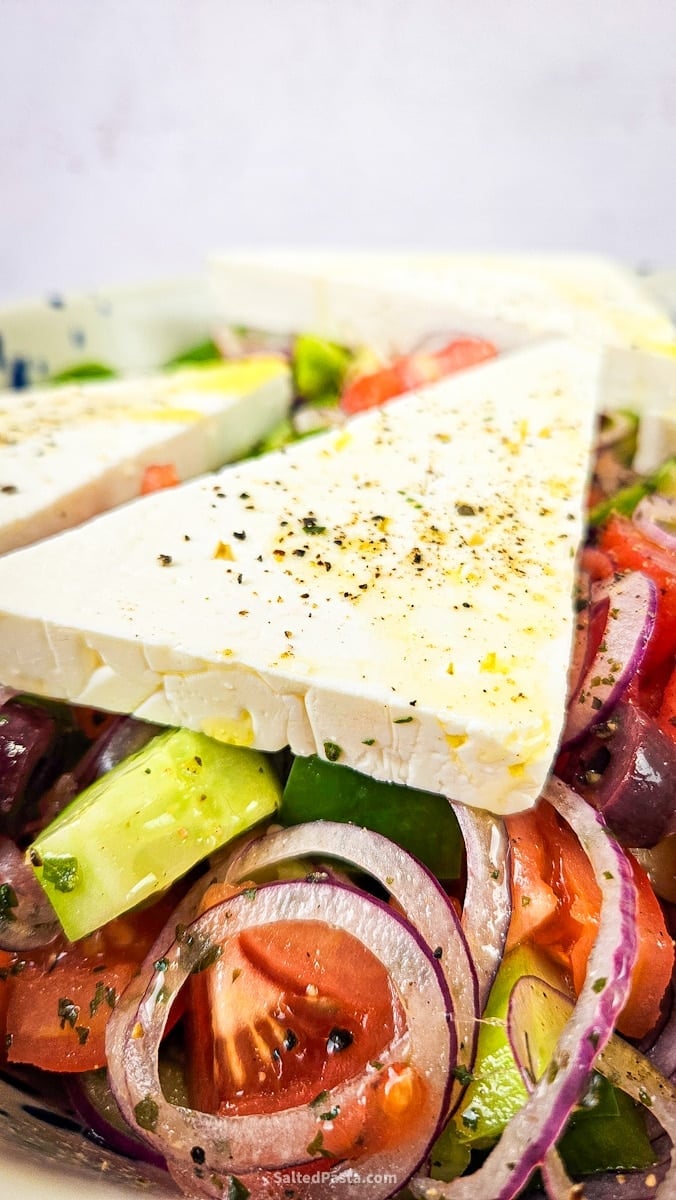
The quantities listed below make 6 large Greek salad servings.
Follow the step-by-step recipe to learn how to make the best Greek salad, and watch the video below for extra guidance.
Don’t forget to subscribe to the SaltedPasta YouTube channel and sign up for the newsletter so you never miss a new recipe!
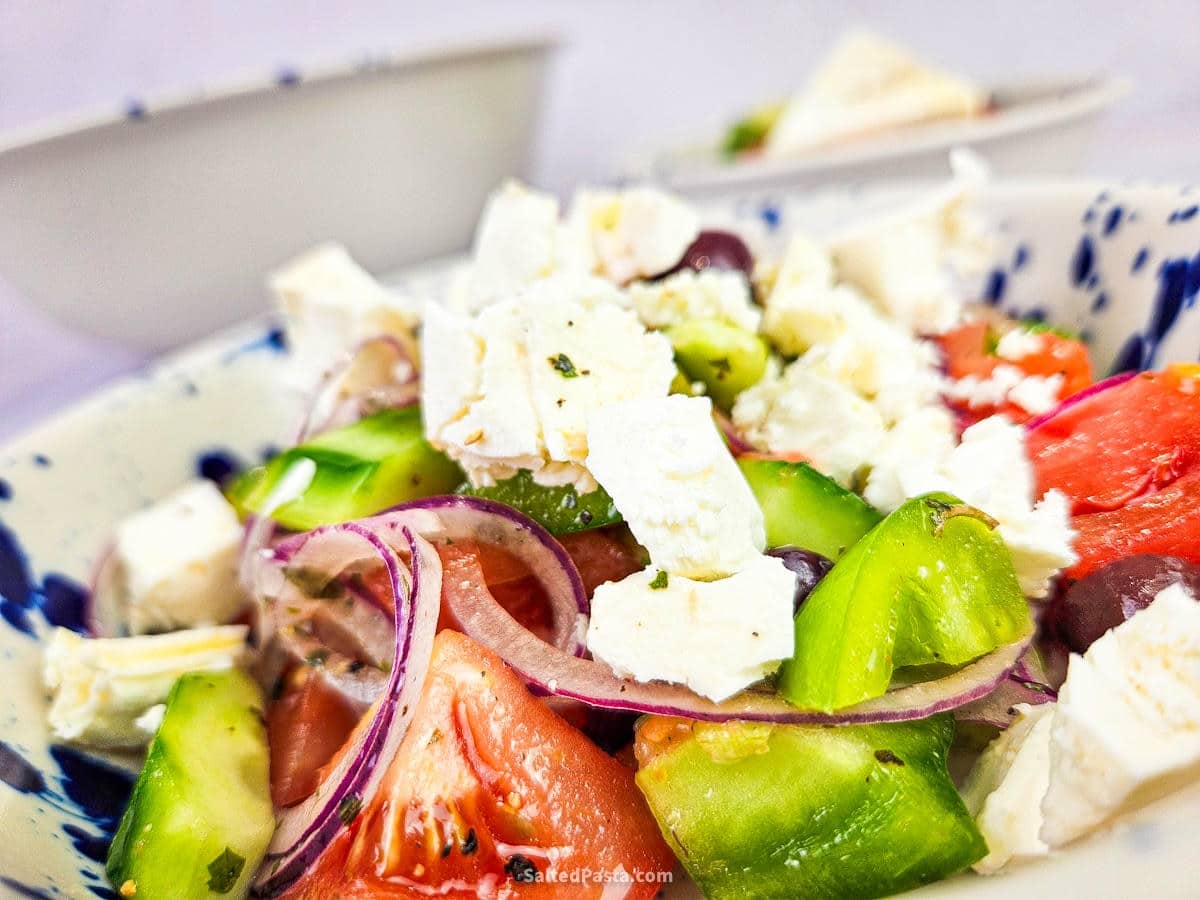
Greek salad – Horiatiki
Video
Greek Salad Recipe
Ingredients
- 4-6 medium tomatoes
- 1 big cucumber
- 1 medium red onion
- 1 green bell pepper
- 160 g Kalamata olives (1 jar)
- 240 g feta cheese (1 large cube)
- 6 tbsp olive oil
- 2 tbsp wine vinegar
- 1 tsp oregano (freeze-dried, fresh, or dried)
- black pepper
- salt
Instructions
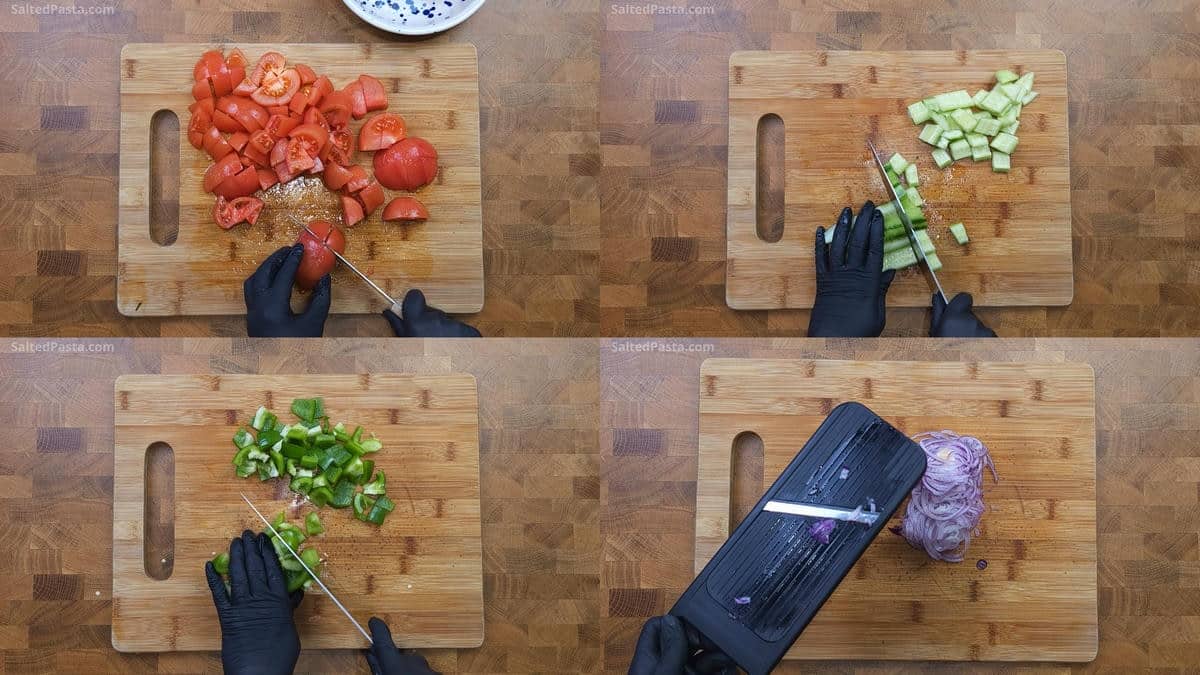
- Cut the tomatoes, cucumber, and bell pepper into large chunks. Slice the onion into thin wedges. You can halve the olives or leave them whole. Leave the feta whole, cut it into large pieces, or crumble it.4-6 medium tomatoes, 1 big cucumber, 1 medium red onion, 1 green bell pepper, 160 g Kalamata olives, 240 g feta cheese

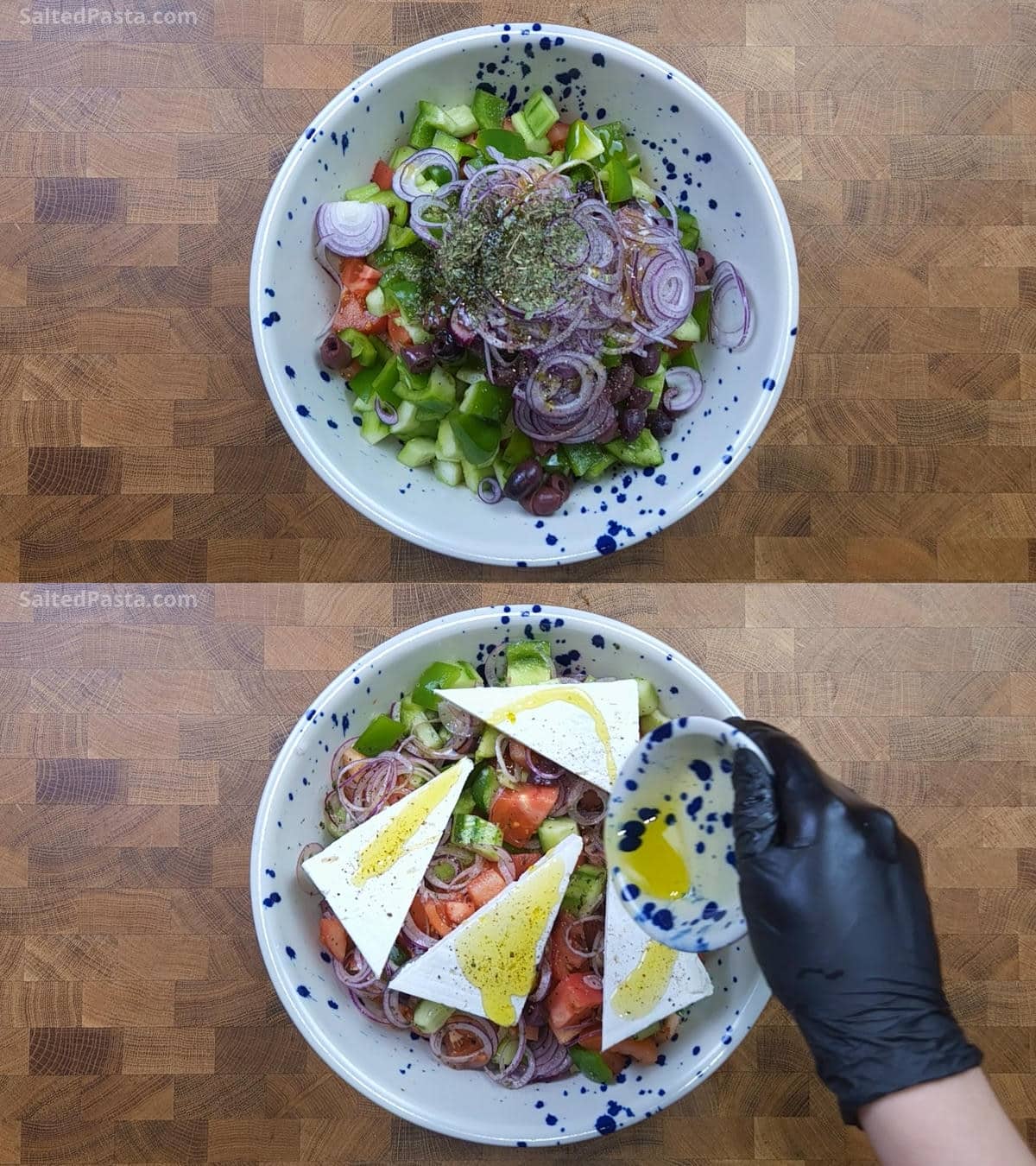
- Place all the vegetables in a bowl. Add the red wine vinegar, pepper, and olive oil. Toss to combine. Finally, add the feta. Drizzle with a little more olive oil and sprinkle with pepper and oregano. Enjoy!6 tbsp olive oil, 2 tbsp wine vinegar, 1 tsp oregano, black pepper, salt

Nutrition
Percent Daily Values are based on a 2,000 calorie diet
You are here: