
Bekri Meze – Greek Pork Stew

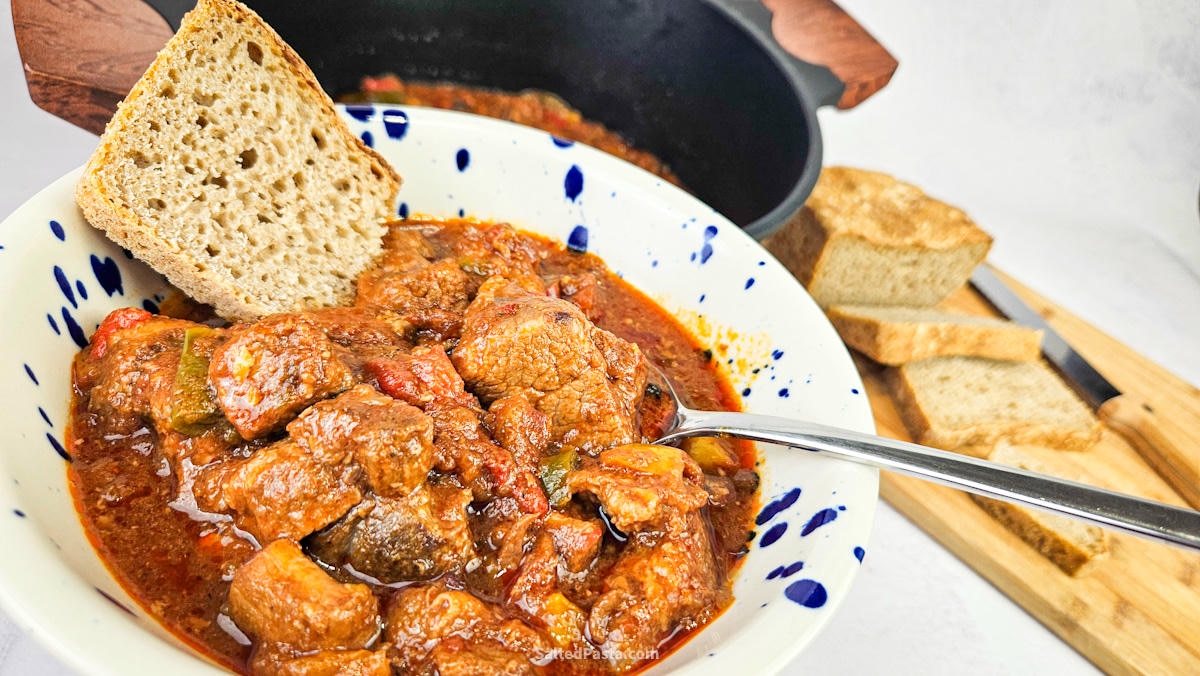
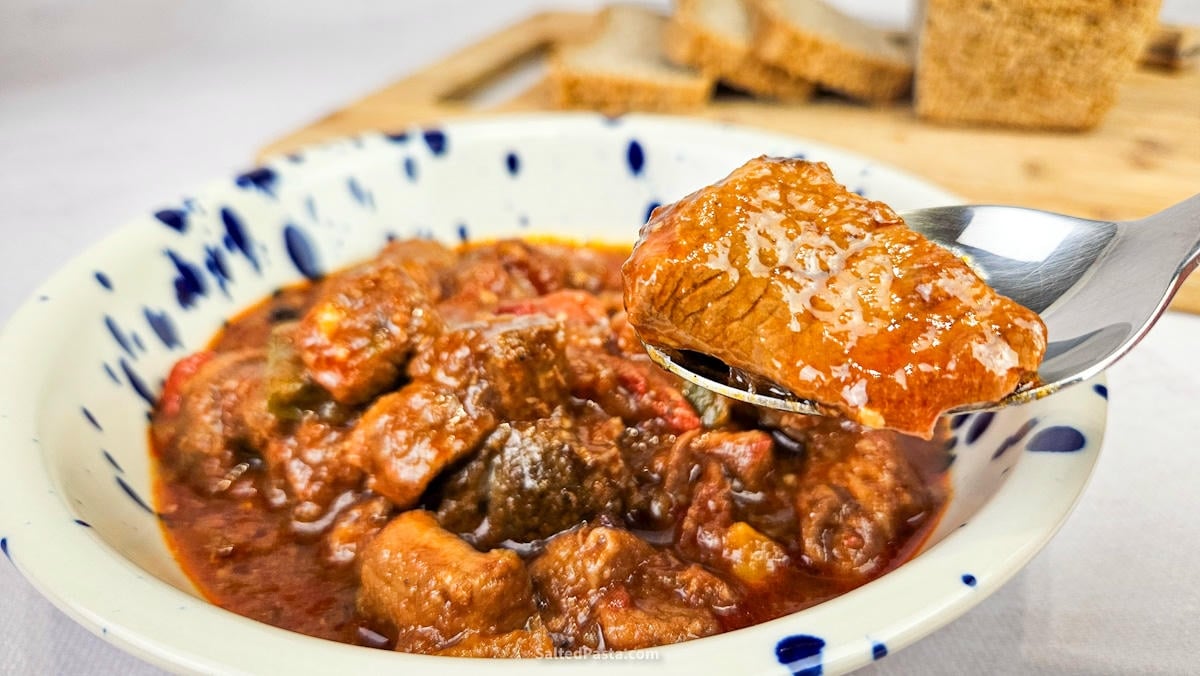
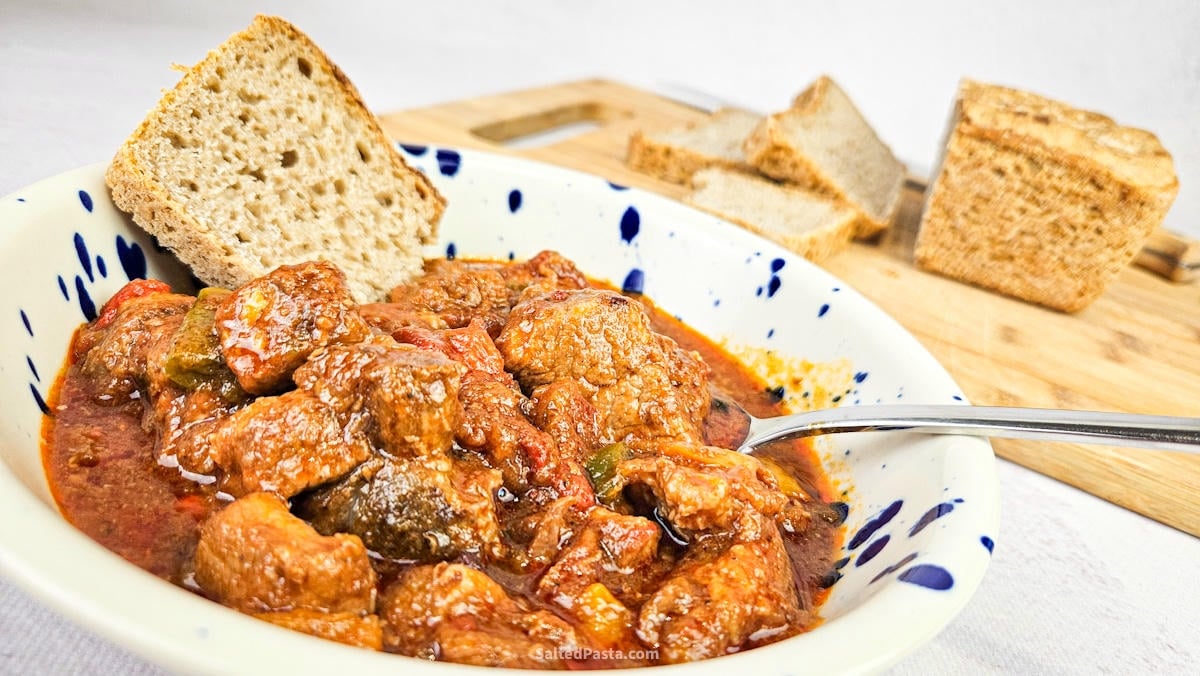
Bekri Meze, or “drunken pork” is served in Greece as an appetizer with wine or other alcohol. A very aromatic one-pot dish, perfect for lunch or dinner. “Meze” itself means a set of small appetizers. It’s often served in a small bowl with a few spoonfuls of the stew, to which you can also order other appetizers, such as bread, baked feta cheese, or grilled vegetables.
The recipe is truly simple, and the stew “makes itself”. It’s a classic “comfort food” that, despite originating in sunny Greece, tastes delicious in winter and autumn. Just reheat a portion and enjoy it with fresh bread and tea. The stew also makes a great main course. Juicy pieces of meat in a thick tomato and pepper sauce also pair well with rice or potatoes. It’s a great idea for a dinner that will last a few days.
Recipe modifications:
- Meat: It’s best to use a cut of meat that has some fat. A pork neck or shoulder is ideal, but you can also use a less fatty ham. If the meat doesn’t have its own fat to render, you’ll need oil for frying. In the video, I’m using a piece of meat weighing about 1.5 kg. It all depends on the cut of meat you buy. You can also use 1 kg of meat without changing the other proportions of the ingredients. The goulash will simply be less meaty. Sometimes chicken is used instead of pork.
- Alcohol: This is a mandatory ingredient. This is what gives the dish its name. Red wine adds depth of flavor, and a high-proof alcohol like whiskey or cognac thickens the sauce. It acts as an emulsifier, making the sauce smooth and creamy without the addition of flour or roux. You can also use other alcohols, such as Greek Ouzo or vodka.
- Other: There are various recipes for bekri meze. Some people also add mushrooms and olives to the goulash.
- Side dishes: Goulash can be served as an appetizer with bread, feta cheese, or a salad. It’s also often served as a main course with fried potatoes, French fries, or groats. It also goes well with boiled potatoes or, for a more Hungarian twist, potato pancakes.
- Time: Cooking time depends on the cut of meat you used and the size of the pieces. When the meat is tender, the goulash is ready. In my opinion, the stew is best the next day. This allows the meat to tenderize further, and all the flavors have time to meld.
While I fry the meat in the fat I previously rendered, you can speed up the process by simply frying the meat in oil and leaving the fat on the meat. Trimming the fat from the meat is a good idea if you’re making the goulash, for example, for children who don’t like fatty cuts of meat.
What can you add to the stew to thicken it?
The addition of alcohol will combine the fat with the water, and the sauce will thicken on its own. There’s no need to dredge the meat in flour. If the goulash is still too thin, simply reduce it by simmering uncovered. The excess water will evaporate, and the stew will have a more concentrated flavor.
Should I salt the meat before frying for the stew?
Salt pork and chicken before frying. If the goulash isn’t salty enough at the end, you can add salt. Remember to add salt only after the excess water has evaporated. This way, you’ll be sure not to over-salt the dish.
How can I make the meat in the stew tender?
I simmer the goulash for about 2-3 hours. This tenderizes the meat. It’s best to prepare it the day before. After reheating and tenderizing the meat overnight in the sauce, the meat will melt in your mouth. The tenderness of the meat is influenced by the cooking time, salt, tomato acid, and the alcohol used in the cooking. The meat itself – its cut, quality, and freshness all play a role in the tenderness of the meat.
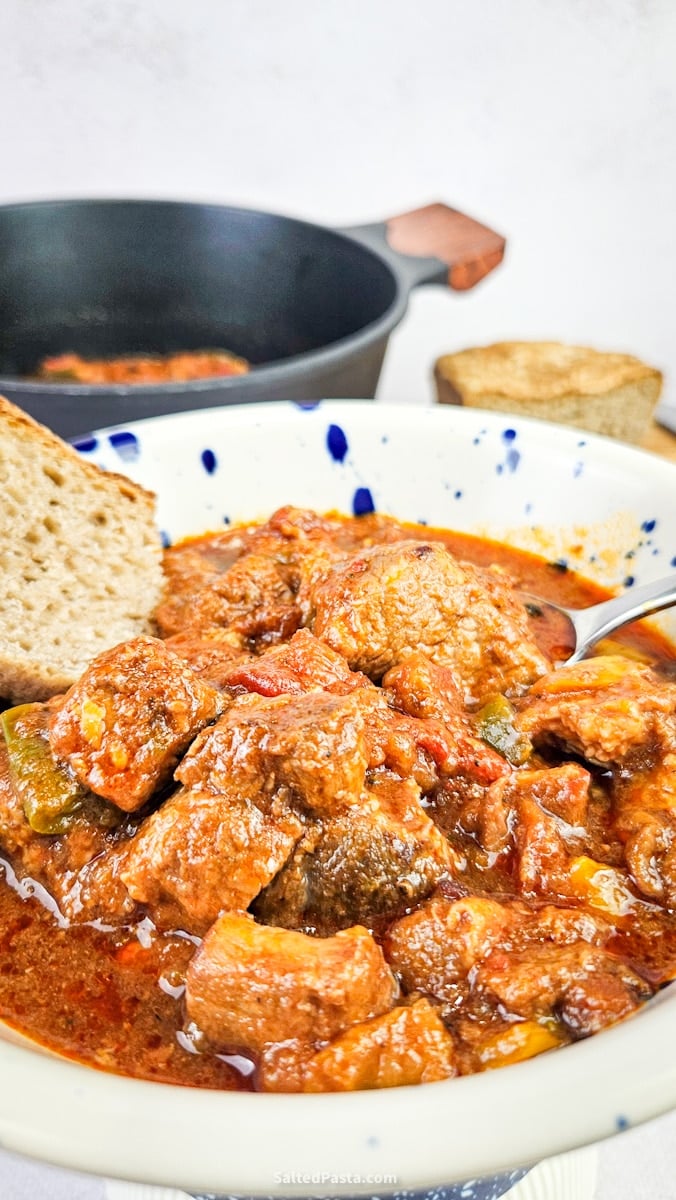
The following amounts yield approximately 3 liters of pork stew, which makes about 15 servings of 200 g each.
Read the step-by-step recipe for how to make the best Greek pork stew with peppers and watch the video below.
Also, subscribe to the SaltedPasta YouTube channel and sign up for the newsletter so you don’t miss any recipes!
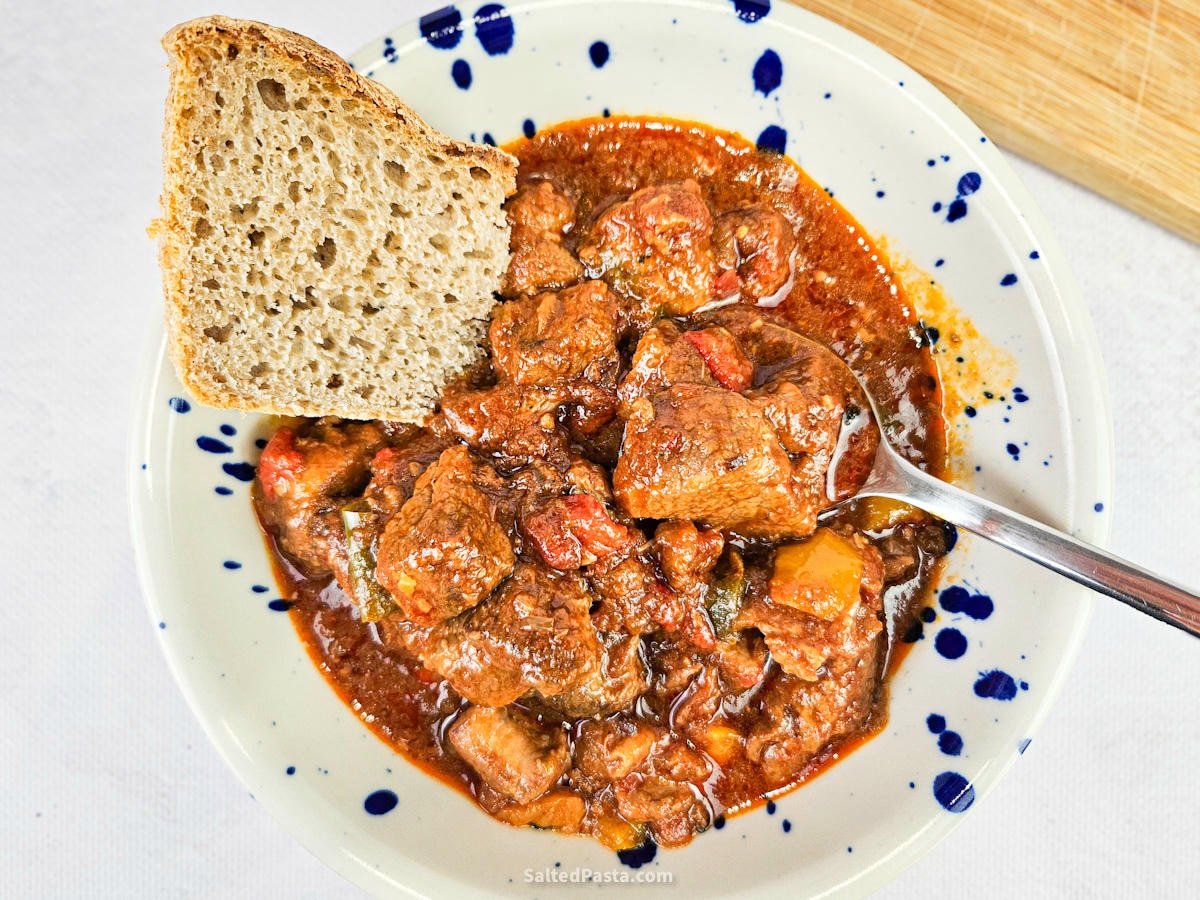
Bekri Meze – Greek Pork Stew
Video
Bekri Meze Recipe
Ingredients
- 1-1,5 kg pork (shoulder, neck or ham)
- 500 g bell pepper (3 peppers)
- 2 onions
- 3 cloves garlic
- 2 tsp allspice (powder or grains)
- 4 leaves bay leaves
- 500 ml beef broth
- 100 ml red wine (dry)
- 50 ml cognac or whiskey (optional)
- 1 tbsp mustard
- 1 tbsp tomato paste
- 400 g canned tomatoes (1 can)
- 1 tsp smoked paprika
- 1 tsp oregano
- 1 tsp cumin
- black pepper
- salt
Instructions
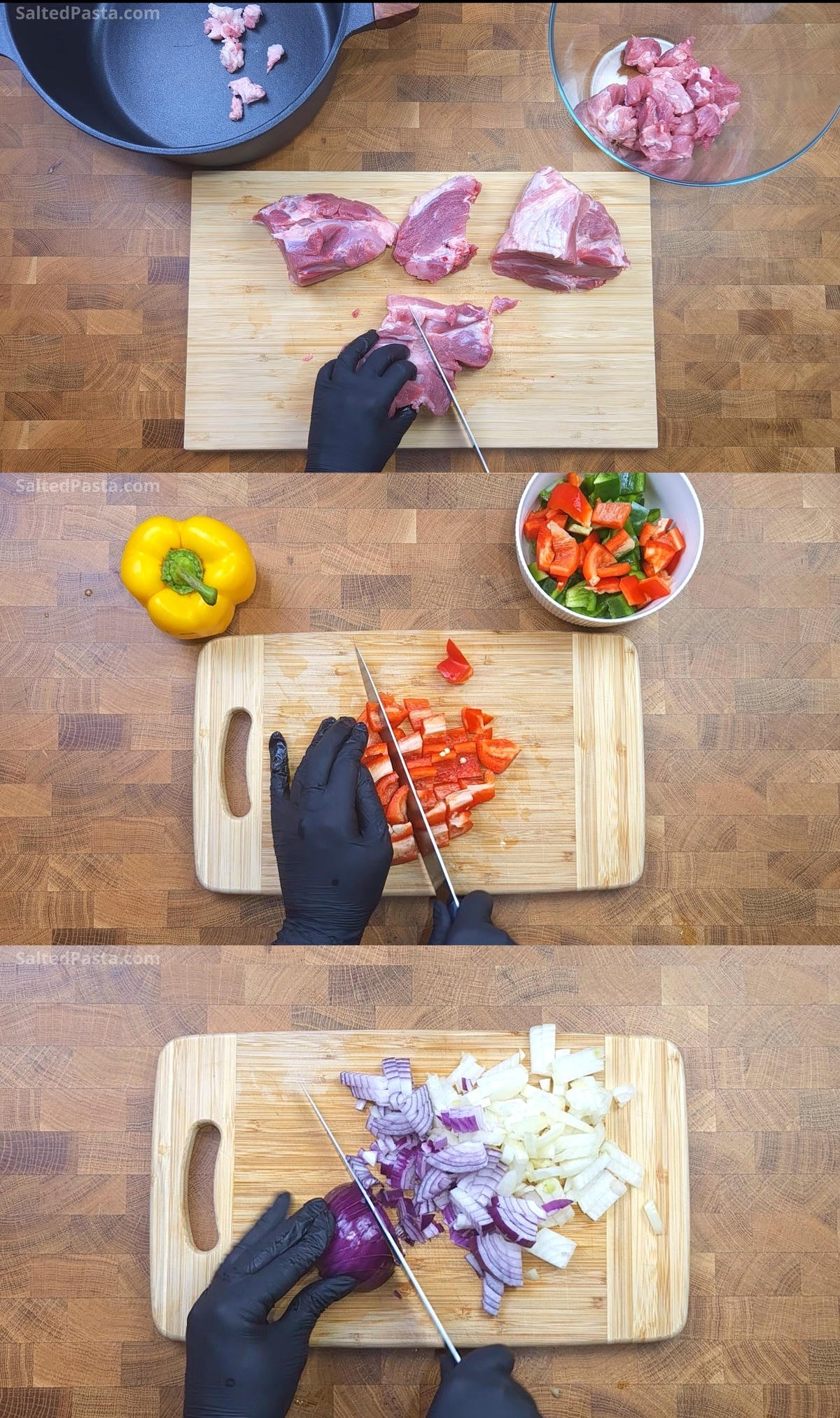
- Cut the meat into large cubes. Trim off the fat and cut into small cubes. Place the chopped fat directly into the pot and the chopped meat in a bowl. Cut the bell pepper into medium cubes. Chop or slice the onion.1-1,5 kg pork, 500 g bell pepper, 2 onions

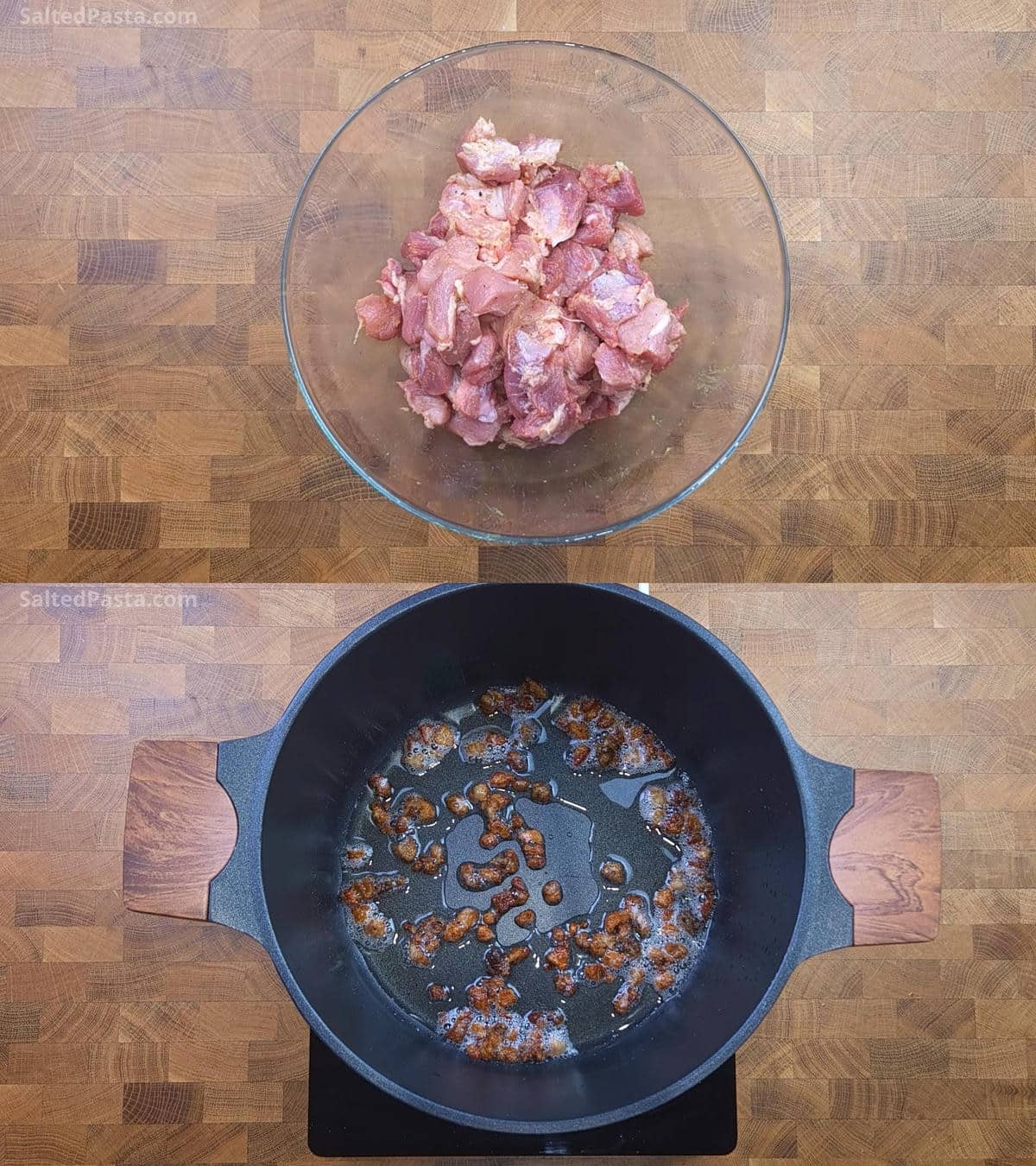
- Add salt, black pepper, and mustard to the meat (in a bowl). Mix thoroughly. Set aside to marinate for a few minutes. Meanwhile, render the fat in a pot. Fry the cracklings over medium heat until brown and most of the fat has rendered. Remove the cracklings from the fat when cooked (they will not be needed again).1 tbsp mustard, black pepper, salt

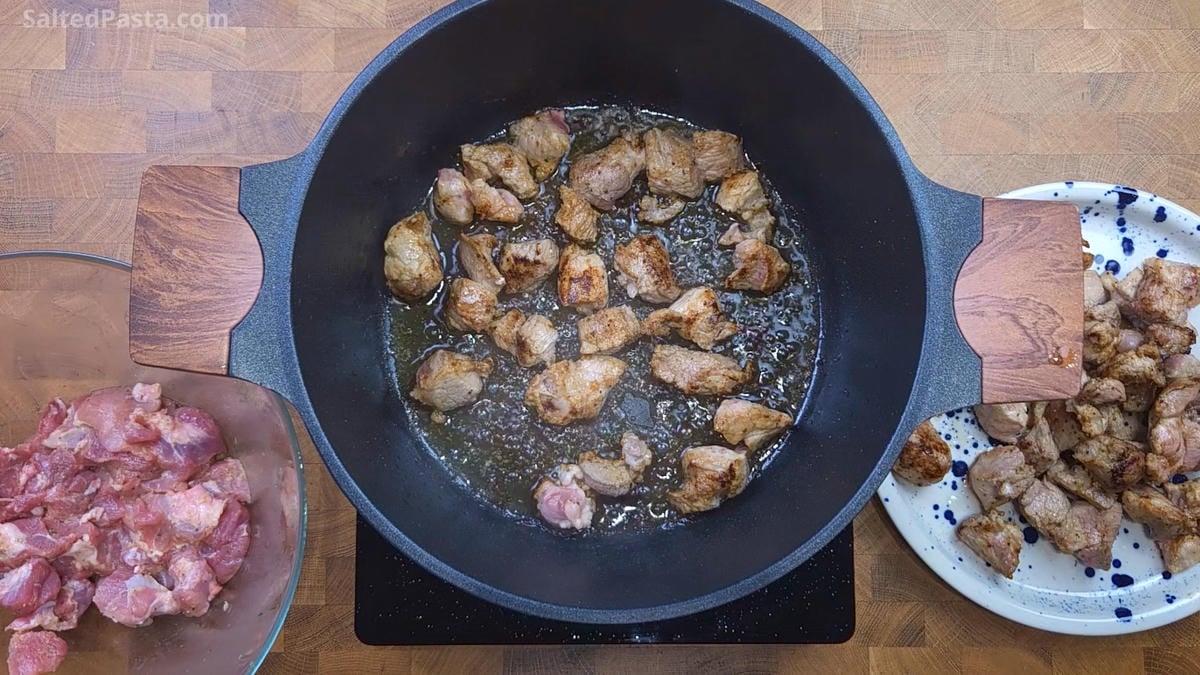
- Fry the marinated meat in batches in the rendered fat. Sear the pieces until the meat seals. Do not stir to prevent the meat from releasing water. Set the seared pieces aside on a plate.

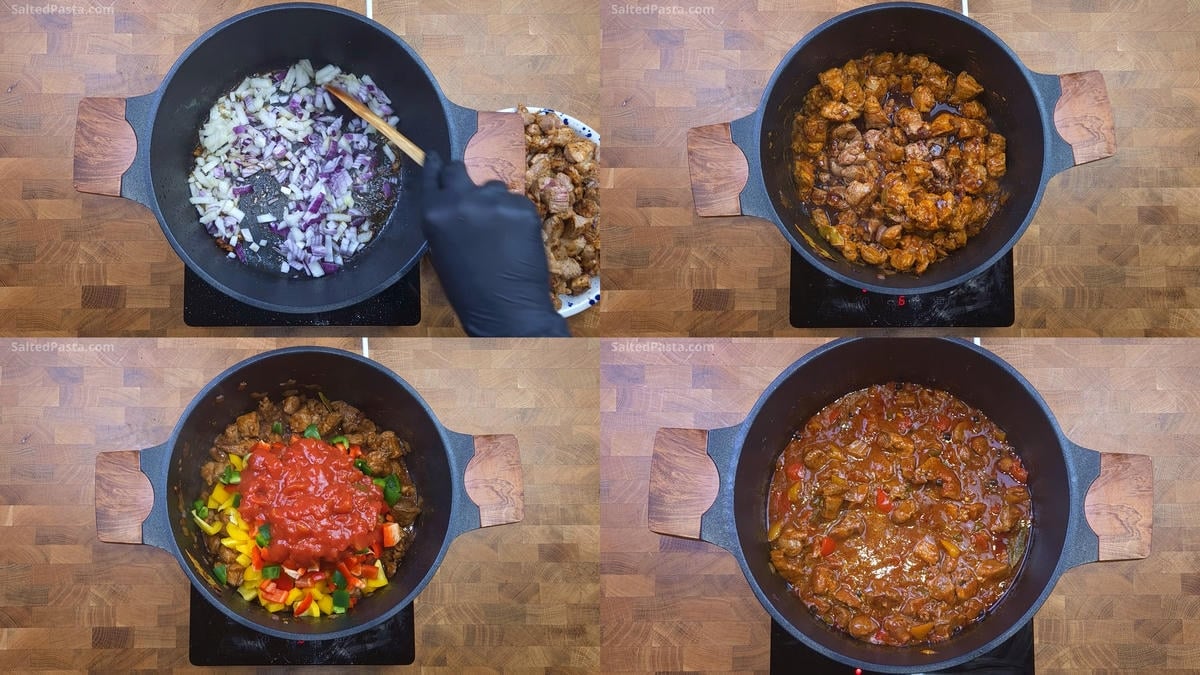
- In a pot, sauté the onion. When the onion softens, add the minced garlic and spices. Then add the tomato paste. Fry for 3 minutes. Add the meat, wine, and whiskey. Cook for a few minutes until the alcohol evaporates. Add the bell peppers, canned tomatoes and broth. Cover, and simmer over low heat for an hour. Then remove the lid and cook until the meat is tender and the sauce has reduced to the desired thickness. Enjoy!3 cloves garlic, 2 tsp allspice, 4 leaves bay leaves, 500 ml beef broth, 100 ml red wine, 50 ml cognac or whiskey, 1 tbsp tomato paste, 400 g canned tomatoes, 1 tsp smoked paprika, 1 tsp oregano, 1 tsp cumin
Nutrition
Percent Daily Values are based on a 2,000 calorie diet
You are here: